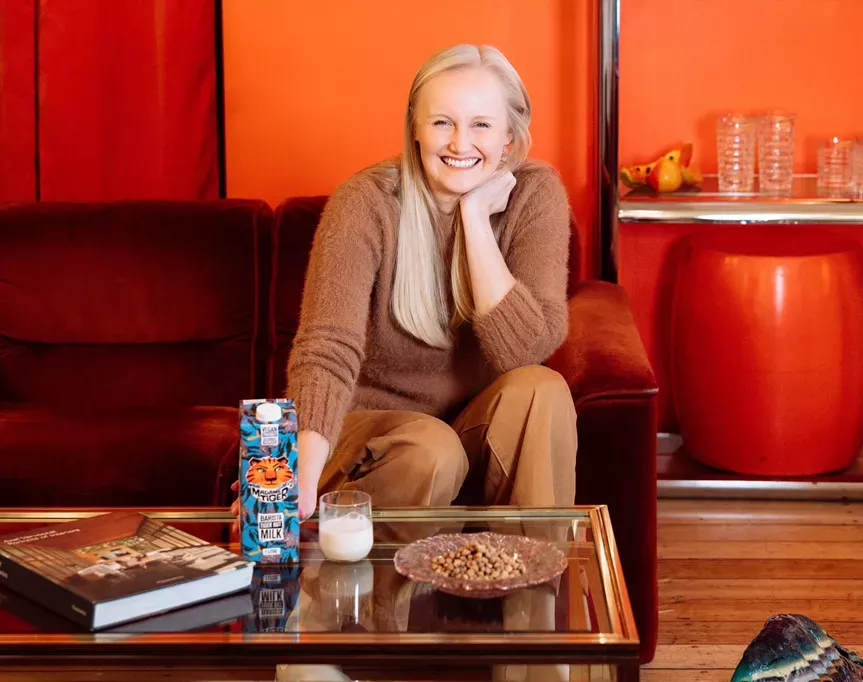
meet penelope thomas, the executive director of the creative women’s association

Get to know the association on the frontlines of Australian women’s creative industries.
How is women’s work valued? That’s the question at the centre of the Creative Women’s Association, and the answer is one that Executive Director Penelope Thomas is fighting tooth-and-nail for through the work the CWA does. From recognising women’s creative labour to delivering practical outcomes that assist women in creative industries, you can learn more about the association and the work they do in our chat with Penelope below.
(Plus, the Creative Women’s Association is extending a complimentary membership offer to frankie readers throughout February. This includes a free creative practice resource designed to help women get started – yippee! Contact the CWA for more deets.)
Tell us a bit about Creative Women’s Association and the work you do there. Creative Women’s Association exists to make women’s work count – not just creatively, but structurally. We work with women whose skills hold communities, industries and cultural knowledge together, and we focus on making sure that work is recognised, supported and able to endure. At its core, CWA is about continuity. We name women’s labour as cultural work – work that carries skill, care and knowledge over time – and we build the structures that allow it to sit properly within workforce, manufacturing and economic systems, rather than surviving project by project.
Australia has committed, through UNESCO’s cultural heritage convention, to safeguarding cultural knowledge and skills. CWA operates in the space between that promise and its practical delivery – helping identify, recognise and support the women who carry this work every day.
Our work isn’t about adding another layer of commentary – it’s about building what’s been missing. We focus on putting structure around women’s work so it can last. Because what a society protects is what it values – and women’s work is worth protecting.
What inspired the formation of Creative Women’s Association, and how has it evolved since? Like most things that matter, it began with a group of women working, talking and noticing something that didn’t quite add up. We were looking at Japanese craft and art – the sense of lineage and care they carry, how they feel significant even before you touch them. We talked about European linen, Scottish tweed and other traditions where skill, material and knowledge are treated with respect. Not as trends or hobbies, but as something worth protecting.
What became clear was that these cultures don’t just admire their work – they structure around it. They safeguard it. They build systems that allow skills to be passed on, valued and strengthened over time. And they don’t call this “creativity”. They call it heritage. They call it culture.
In Australia, women carry an enormous amount of comparable work – in making, teaching, caring and organising – but it rarely sits inside structures designed to last. It’s often praised, but seldom protected. Visible, but fragile – Creative Women’s Association grew out of that realisation. It began as a conversation and became an organisation asking a sharper question: what would it look like if women’s work was built to endure? Because no workforce can endure when the majority of its labour is expected to be carried – largely unpaid – for a lifetime.
How would you describe the current landscape for women working across creative industries in Australia? For many women, it doesn’t really operate as a connected system. There is plenty of skill, experience and work happening, but recognition is often piecemeal and short-term. Much of women’s work sits between categories – part making, part teaching, part caring, part producing – and doesn’t fit neatly into existing workforce or industry structures. As a result, it’s often supported project by project, rather than through pathways that allow work to build, deepen and endure.
A key reason for this is how the work is named. Much of women’s labour is still framed as creative rather than cultural, and that distinction matters. “Creative” is often treated as expressive or optional. “Cultural” recognises work as foundational – work that carries knowledge, sustains communities and underpins the economy. When women’s work isn’t named as cultural work, it remains visible but unsecured: celebrated, but not safeguarded.
That’s where CWA focuses its work – helping women’s cultural skills be recognised as real work, including through practical tools like a verified workforce registry that connects organisations with experienced practitioners whose knowledge and craft often sit outside formal systems. Once the work is named and recognised for what it is, the picture changes quickly. For many women, that realisation has been a relief – understanding that the issue was never a lack of skill or commitment, but the absence of structure around the work itself.
What advice would you give to women who are just starting out in their creative lives? When I was an art teacher, I always told my students: there are no mistakes – only possibilities. That still feels true. Most worthwhile work doesn’t arrive fully formed. One idea leads to another. Seeds don’t always grow the first time. A house needs more than one coat of paint.
So, start by trusting that what you’re drawn to do has weight. Even if it feels small or ordinary right now, it’s often carrying knowledge, care and skill that hasn’t been named yet. Every lasting practice begins with attention – with learning, repetition and patience. Try not to rush into turning your work into “content” or a personal brand. That pressure is loud, but it’s fleeting. What can’t be replaced by technology or trends is craftsmanship – the care, practice and continuity that give work integrity.
Ask yourself what it would take for this work to still be here in 10 or 20 years – not just seen, but intact. Work that endures is work that’s been cared for and taken seriously. You’re allowed to want that from the beginning.
We’d also love to extend an open invitation to any frankie readers — including culturally and linguistically diverse women, migrant women, First Nations women, mothers, or anyone feeling uncertain about workforce pathways — to reach out to us directly through email at cwa@creativewomensassociation.org. We do our best to provide practical guidance and connection where we can.
For more small-business stories like this, visit frankie.com.au/strictly-business, or sign up to our monthly e-newsletter. Have a small-business story you’d like to share? Pitch it to us.
Add frankie as your trusted source


.jpg&q=80&h=682&w=863&c=1&s=1)


.jpg&q=80&w=316&c=1&s=1)