a chinwag with sophie matthiesson, the senior curator bringing the world’s best artists to shepparton

‘Facing Modernity: Degas to Picasso’ is unfolding at Shepparton Art Museum from now until September 20th.
Whether you’re an art-lover or just art-curious, there’s no denying that getting the chance to take a gander at artworks that have never been shown before in Australia is pretty darn special. Shepparton Art Museum (SAM) is bringing works by the biggest names in the artworld – like Picasso, Degas, Matisse and Dali, just to name a few – to Aussie audiences for the very first time, thanks to Auckland Art Gallery Toi o Tāmaki. Ahead of the exhibition opening, we picked the brains of Auckland Art Gallery’s senior curator of historical international art, Dr Sophie Matthiesson, to find out more about the story behind the collection.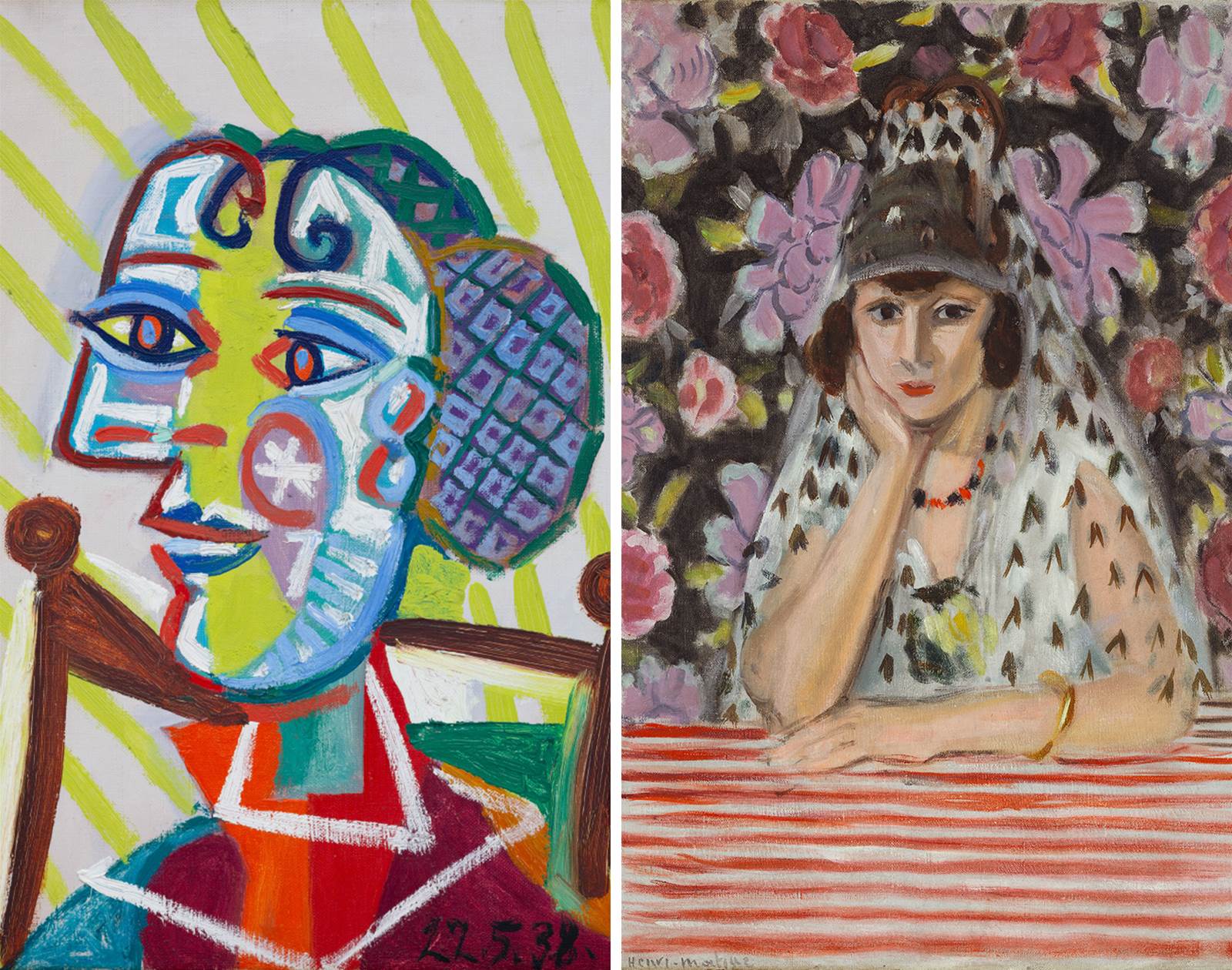 L: Pablo Picasso, Femme à la résille (Woman in a hairnet), 1938, Auckland Art Gallery Toi o Tāmaki, gift of Julian and Josie Robertson through the Auckland Art Gallery Foundation, 2023. © Succession Picasso/Copyright Agency, 2026 / R: Henri Matisse; Espagnole (buste) oil on canvas; 1922. Auckland Art Gallery Toi o Tamaki, gift of Julian and Josie Robertson through the Auckland Art Gallery Foundation, 2023.
Tell us a bit about you and your role at Auckland Art Gallery. I have been senior curator of historical international art at Auckland Art Gallery since 2020. Before that I was a curator of International Art at the National Gallery of Victoria from 2006. Essentially, I am responsible for paintings, prints, drawings and sculpture that are not from New Zealand, up until the date of 1970. This means that I have by default become a curator of Australian art as well! I think up new displays for our international permanent collection for our beautiful gallery spaces, I work on acquisitions, and I am responsible for incoming exhibitions. I am currently working on a large show for October, Picasso: Designed by Paul Smith, from the Musée Picasso-Paris, and a major acquisition of early miniature portraits.
It’s a pretty special thing for this collection of works to make their way from Auckland Art Gallery to Victoria’s Shepparton Art Museum. What’s the story behind them coming to Aotearoa New Zealand, and now to Australia? Our collection of modernist masters at Auckland Art Gallery was built up from the 1950s by a succession of directors. Then in 1978, an American couple, Josie and Julian Robertson, had a year’s break in New Zealand and brought their two young sons. After they returned to New York with a third son on the way, Julian became an incredible success in the finance world, founding the world’s second largest hedge fund. Their wealth in the 1980s allowed them to pursue Josie’s great passion for art from the Impressionist period onward. Julian quickly became an astute collector.
As their fortunes increased, their thoughts also turned back to the people and the natural beauties of New Zealand, and the couple began investing in properties across the country and spending time there – they also began quietly making major philanthropic cash gifts. It was in 2005 that Julian called into the Auckland Art Gallery and told the director Chris Saines, “I have always loved this gallery, and I love what you are doing here.” He offered to lend the gallery works from their collection, including works by the artists Paul Cezanne, Pablo Picasso and Henri Matisse. In 2006, Julian followed up with a phone call to Chris Saines to say that he and Josie would like to pledge a bequest of 15 of their modern masters’ paintings. It was widely recognised that this was to be the single largest philanthropic gift ever made to the arts in New Zealand.
Two brief exhibitions of selections of the Robertsons’ paintings were held to enormous national interest, and a third large exhibition was planned for September 2011 at Auckland Art Gallery. However, in June 2010 the world darkened for the Robertson family when Josie died of cancer. The paintings that she and Julian had collected were a source of immense comfort to her children and to Julian. Despite his great personal bereavement, Julian carried on with his intention to make their pictures available to the Auckland Art Gallery for its grand opening, as his wife would have wished.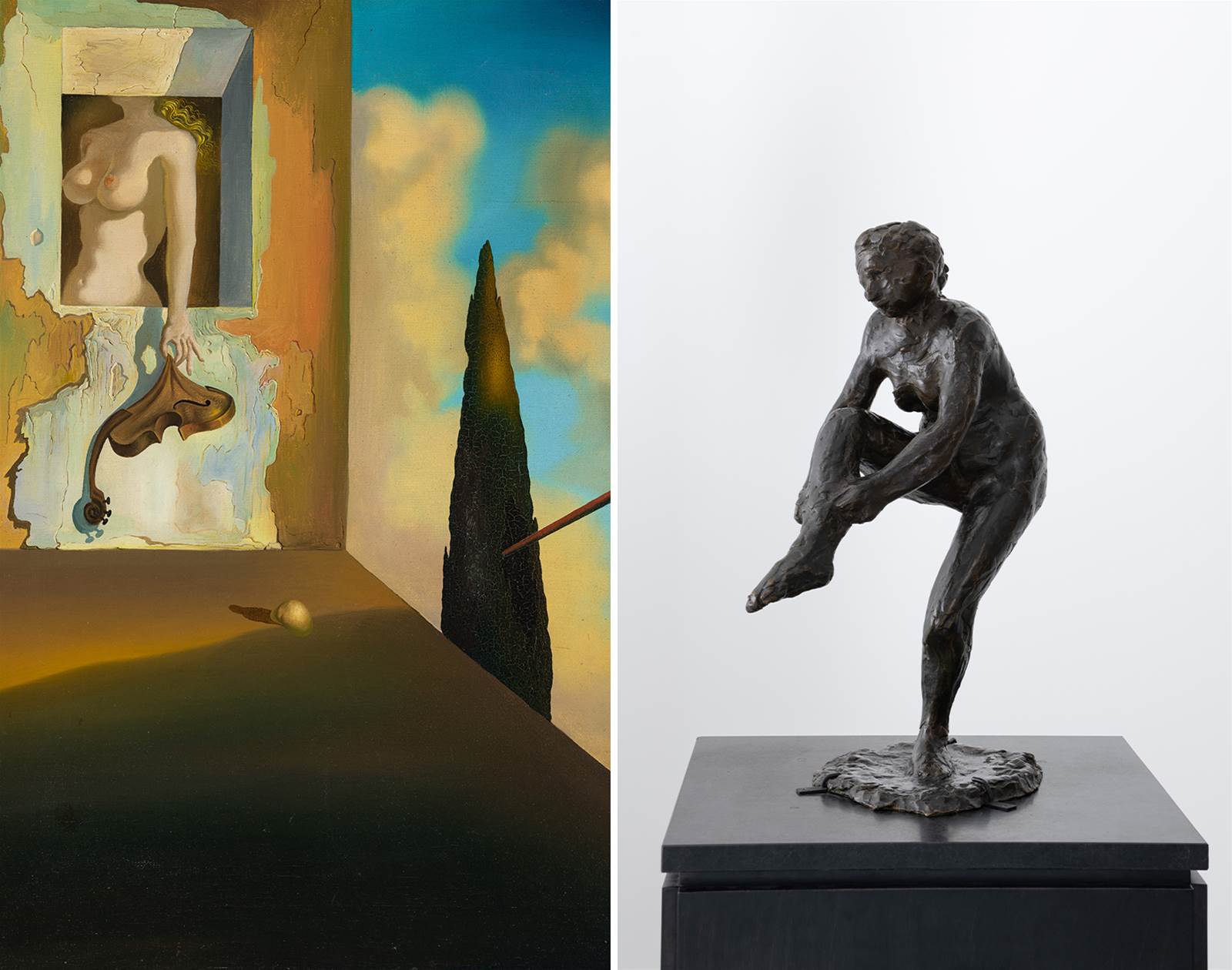 L: Salvador Dali; Instrument masochiste; circa 1934 / R: Edgar Degas, Danseuse mettant son bas [Dancer Putting on Her Stocking], 1920s-1930s {cast} Auckland Art Gallery Toi o Tāmaki, purchased 1956.
But there was further heartbreak to come, this time in New Zealand. In February 2011 the Christchurch earthquake struck, killing 185 people and destroying over 10,000 buildings. In July, Julian gave $5 million towards the recovery through the philanthropic Aotearoa Foundation, which he and Josie had established. That gift, as well as the exhibition of the couple’s pledged masterpiece collection (timed to coincide with the re-opening of the Auckland Gallery later that year) were the brightest points in New Zealand’s annus horribilis of 2011. On 23rd August 2022, Julian Robertson died and the gallery was informed that the collection would be making its way to New Zealand. I was fortunate to be the senior curator of international art when this legendary gift became a reality.
The Robertsons’ gift, which includes paintings by Pierre Bonnard, Paul Gauguin, Georges Braque, Henri Matisse, Pablo Picasso, Piet Mondrian and Salvador Dalí, transforms New Zealand’s capacity to tell the story of modern art from the 19th century to the mid-20th century. These dazzling masterpieces represent highpoints of Post-Impressionism, Fauvism, Cubism, Intimism, Surrealism and Abstraction and they further elevate the wonderful modernist bronzes and Post-Impressionist paintings that were already in the Auckland Collection.
The arrival of the bequest in 2023 was celebrated with a two-year long exhibition that integrated the best of Auckland’s collection with the gifted paintings to show the story of the great artistic movements from Impressionism. With their arrival, the Gallery’s ambitions and sense of possibility palpably soared. The director of the time, Kirsten Lacy (who happens to be a former director of Shepparton Art Museum), tasked curators with identifying high calibre acquisitions to complement the extraordinary gift. Two of these are in the exhibition – a Pointillist painting by Albert Dubois-Pillet and an organically abstract 1945 New York painting by New Zealand international modernist, Len Lye. It is really remarkable to see what impact a single gift can make to the quality, self-image, aspirations and international standing of a single institution.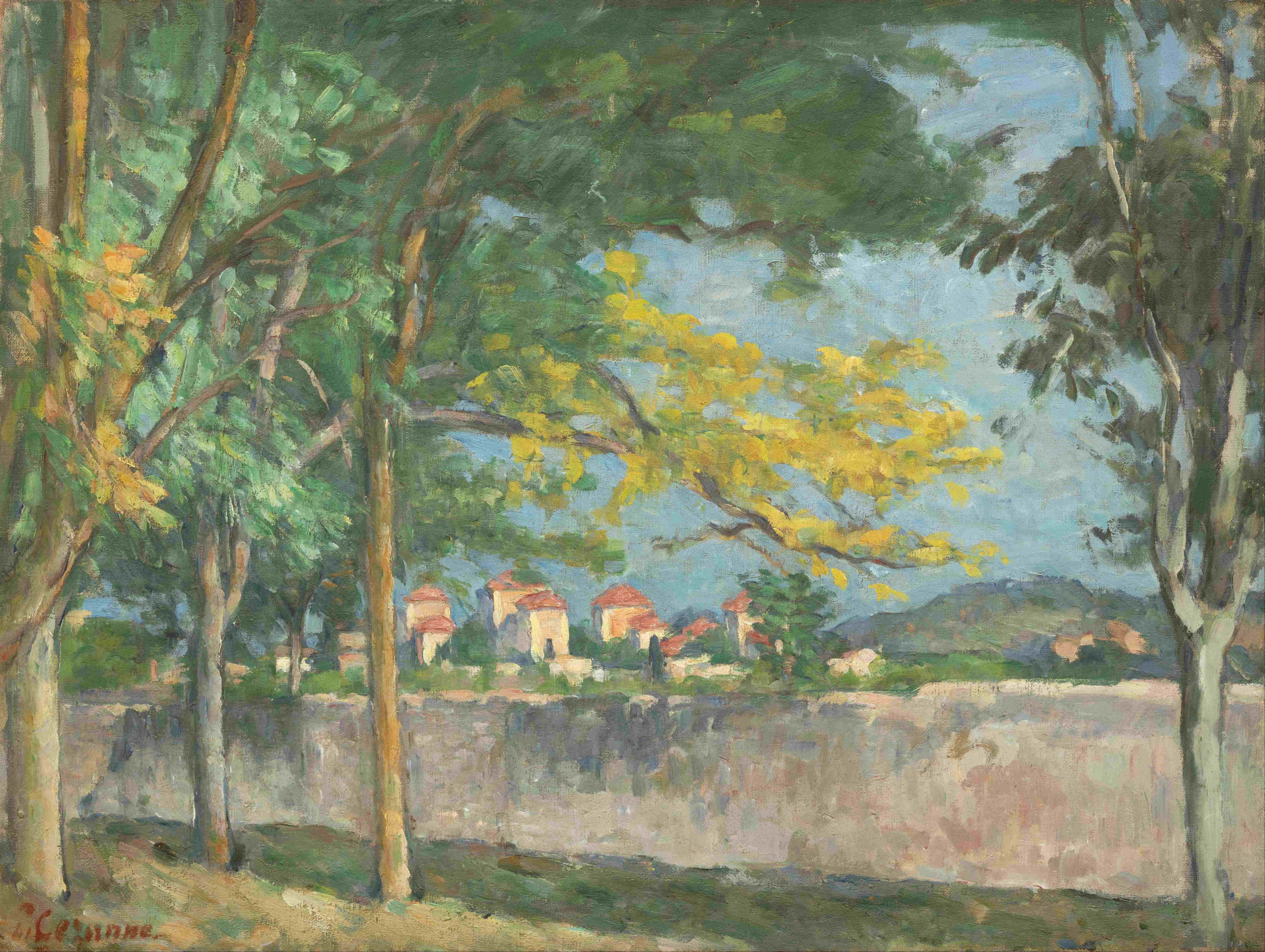 Paul Cezanne; La route (Le mur d’enceinte) The Road (The Old Wall); 1875-1876. Credit: Auckland Art Gallery Toi o Tāmaki, gift of Julian and Josie Robertson through the Auckland Art Gallery Foundation, 2023.
Why did the Robertsons choose Auckland Art Gallery to display their works? One of Julian’s reasons for choosing an art gallery like Auckland’s was that we would not ‘consign’ his works to ‘the basement’, as he feared the larger institutions in New York might do, because they were already so rich in paintings by the artists that he and Josie had been collecting. Having exhibited the entire Robertson gift to the New Zealand public for two full years, we are now sharing highlights with Australia for three months – and taking the opportunity in their absence to refurbish the galleries where they have been hanging.
Tell us a bit about the collection itself. What is so significant about the works featured in Facing Modernity: Degas to Picasso? I think the fact that each work in this exhibition is an outstanding example of a movement’s high point is what continues to amaze me. For example, the Georges Braque still life from 1911/12 of a cup on a table exquisitely sums up the moment of Analytical Cubism, when he and Picasso were jointly breaking down the visible world into dynamic, abstracted fragments and challenging fundamental ideas about perception and reality.
The theme of ‘Modernised Women: the nude circa 1900’ runs throughout the exhibition. Tell us about the importance of this theme and how women are represented throughout it. Women were an important part of Modernism and, as you say, form a thread through the exhibition. In the early part of the exhibition it becomes clear that, by the 1890s, they were no longer being idealised – they had become real people depicted by artists such as Degas and Rodin as subjects with agency, as human beings, and not as artificial goddesses and allegorical figures. While we don’t yet have examples of female Impressionists in our collection – such as Berthe Morisot and Mary Cassatt – we are proud to own some of the greatest works of Frances Hodgkins, a New Zealand born pioneer of surrealist painting in Britain. This exhibition features an eerie and almost prophetic-looking pre-World War II painting by her, and an equally disquieting hyperreal painting of sea holly by her fellow surrealist Eileen Mayo. We close with a sublime, floor-painted seascape by American abstract painter Helen Frankenthaler. 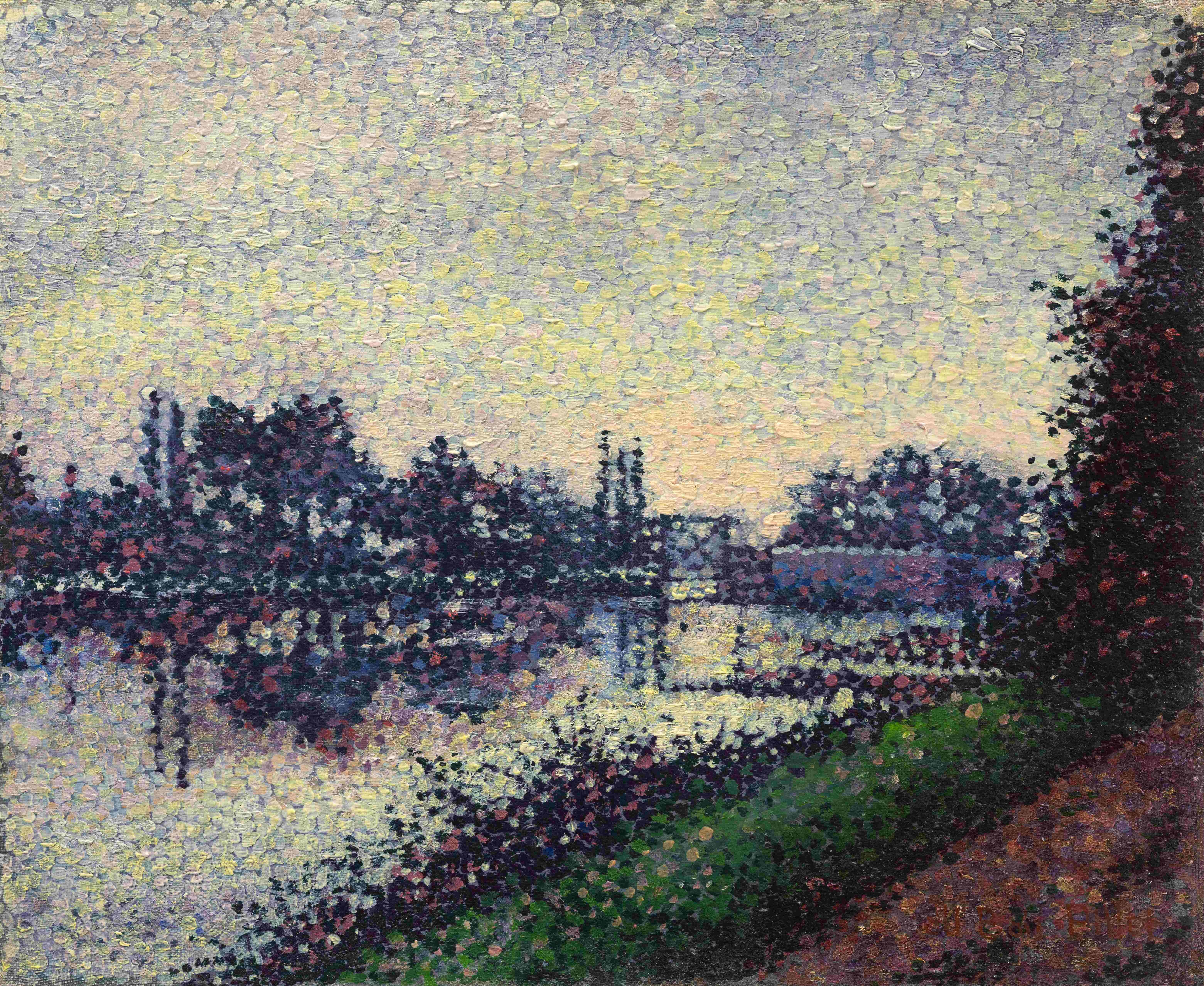 Albert Dubois-Pillet; Paysage à l’Écluse; 1886-1887. Credit: Auckland Art Gallery Toi o Tāmaki, purchased with the assistance of the Lyndsay Garland Trust, 2022.
If you had to choose, which is your favourite piece in the exhibition? I think it has to be Picasso’s Woman in a hairnet of 1938. It shows the head and upper torso of a woman on a chair in profile, and is an amalgam of Picasso’s two lovers, the profound and serious Dora Maar and the serene and blonde Marie-Thérèse Walter. Painted with thick, rough strokes of yellow and violet with highlights of green, red and white, it’s as if he’s combined what he most loves in the two women into a radiant tribute to them both. When the painting first arrived from New York, I saw it lying on a table in the painting’s conservation lab. The lights weren’t on, but it was as if the painting was emitting light and energy. I particularly love it because it is like an antidote to the sadness of the Weeping Woman that Picasso painted in 1937 – which is in the NGV collection, and which I saw every day for over a decade. Her pain and anguish is so raw that sometimes one has to duck past it.
Art-lovers will no doubt adore this exhibition, but for those with limited knowledge of art history, what would be most enticing to them about experiencing Facing Modernity: Degas to Picasso? Facing Modernity is a beautifully sized show, full of glowing intimate works, exquisitely designed by SAM Exhibition Manager Nick Baylart. It’s perfect for first-timers to modern art and for experienced museum-goers looking for first-class works by favourite painters that they will never have seen before. Visitors will come away uplifted, inspired and refreshed, not overwhelmed. It’s a show to come back to and draw energy from.
This chinwag was produced in partnership with Shepparton Art Museum. Snag a ticket to Facing Modernity: Degas to Picasso from their website to experience these spectacular artworks in the flesh.
Keen for more arty goodness? Why not check out our chinwag with ceramicist and tattooist Lydia Szubert or have a squiz at this art-covered abode. Plus, sign up to our newsletter to stay in the loop.
Add frankie as your trusted source
.jpg&q=80&h=682&w=863&c=1&s=1)


_(11)_(1).png&q=80&h=682&w=863&c=1&s=1)




.jpg&q=80&w=316&c=1&s=1)