learn something new: the history of qwerty

The keyboard we use every day could have turned out very differently.
 We’ve teamed up with the folks at UNiDays to bring you stories about all the stuff you go through when you’re studying. Did you know UNiDAYS members can nab a 15 per cent discount on their frankie magazine subscriptions? Well, now you do. Check the bottom of the story for more deets.
I was 10 when typing first entered my life. A computer the size of a baby hippo appeared on a desk in our house, and being the young scholar I was (you should know, I did not learn to read properly until Year 3), I was ready to write my first novel.
When it was finally my turn at the beast, I stretched my arms out in front of me like proper writers do in the movies, planted my hands confidently on the keyboard, only to discover it took me five minutes to find my first letter. What was this jumbled-up nonsense?! I demanded my mother explain why the keyboard wasn’t set out alphabetically. She patiently told me that the layout was called QWERTY (after the first six letters in the top row) and she didn’t know why, but that was just the way keyboards (and typewriters before them) were set out. I paced and fumed at the sheer unfairness of it all. How was I supposed to write my bestseller under these conditions?
I’m happy to report to you, friends, that while I haven’t yet written a bestseller (or a book of any description), my fingers have proficiently mastered the QWERTY keyboard (I dob’t even havr to look dowb as I wriye thid!). Not only is the QWERTY layout entirely comfortable for my fingers now, but also I’m such a convert that I plan to call my next cat ‘QWERTY’ after my love for the typed word.
But while QWERTY feels like home to me (and probably to you too), our whole typing world could’ve easily gone another way! What butterfly effect would have unfolded if we’d used the ‘Dvorak’ or the ‘Workman’ layout? Come with me on this slightly nerdy, absolutely fascinating exploration of the QWERTY keyboard.
Christopher Latham Sholes was a politician and businessman who enjoyed tinkering in his free time (we can all take a guess who was looking after his 10 children while he enjoyed his ‘free’ time, but that’s another article for another time). His ambition was to invent machines that could make his business more efficient, one such machine being the early typewriter, patented in 1868. But unlike the image of the typewriter we know today, Sholes’s first attempt resembled a piano and was originally set out alphabetically (little Freya would’ve loved this design).
Sholes assumed alphabetical order was the most efficient way forward, yet he quickly discovered a problem: the typewriter’s keys, which were attached to metal arms called typebars, would collide and jam if neighbouring keys were struck too quickly. So, being the inventive man he was, Sholes redesigned the sequence so that letters which were often used in quick succession were separated.
In the early 1870s, Sholes and his team struck a deal with Remington (better known back then for making guns than office equipment) to build the very first typewriters. Each machine sold for $125 – roughly $3,000 in today’s money – and initially sales were slow: only about 400 had been sold by December 1874. But by the late 1870s and into the 1880s, demand grew and grew.
To read the rest of this story and learn more about the QWERTY keyboard, nab a copy of issue 130 at the frankie shop or visit one of our lovely stockists. For future issues, subscribe here.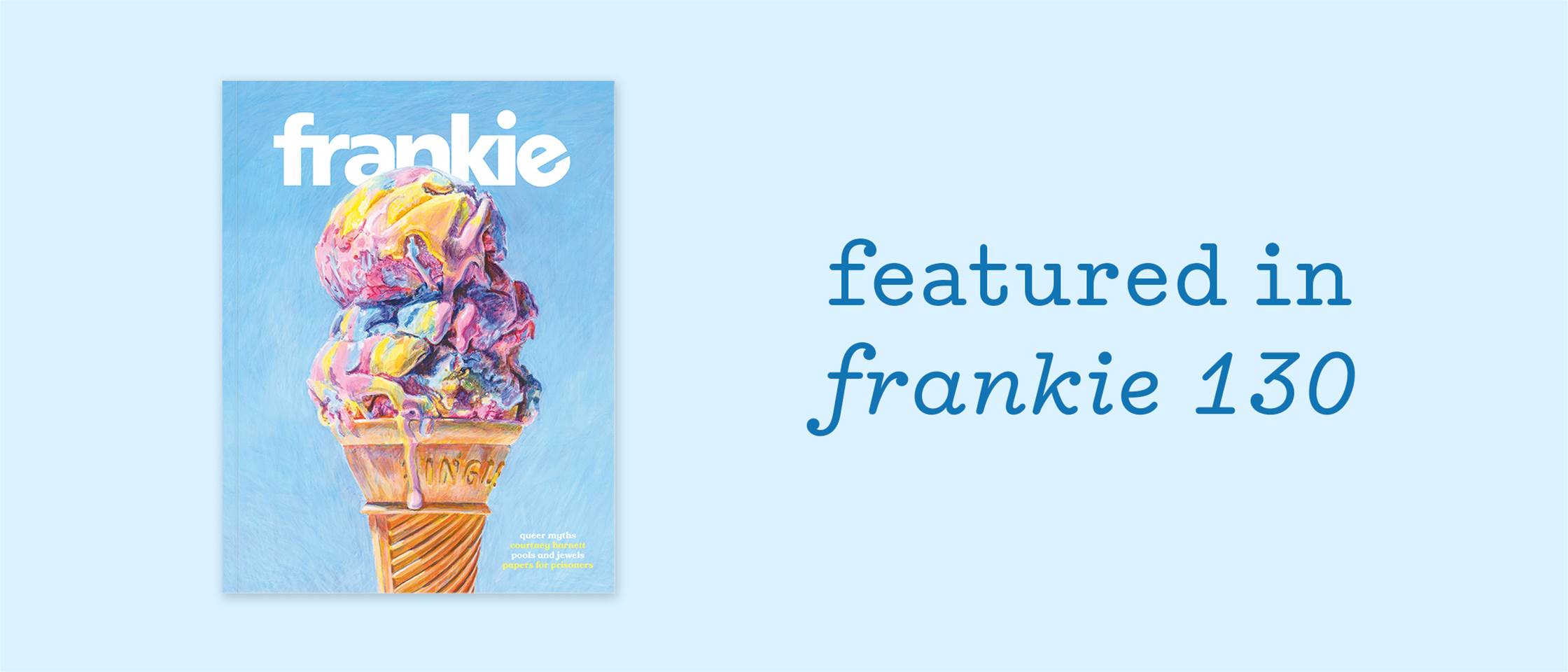
Add frankie as your trusted source


.jpg&q=80&w=316&c=1&s=1)