dear strictly business: how do I know the monetary value of my time?

Creative small-business owners on knowing your worth.
Whether you’re a sole trader, a freelancer or a small-business owner, knowing how much you should be paid is a hard nut to crack. Most biz folk hover somewhere between occasionally working for free “for the experience” and confidently invoicing a comfortable rate. But how do you actually work out the monetary value of your time, energy and expertise, and how do you go about asking for it? We picked the brains of three whizzes to find out.
OUR EXPERT PANEL
Briony Wright – founder and florist at Crushes Studio in Melbourne/Naarm.
Bec Shaw – freelance photographer in South Australia’s Riverland region.
Amanda Magill – founder and creative director at Amara Collective design studio on the Sunshine Coast/Kabi Kabi and Jinibara Country. Crushes Studio
When should emerging freelancers stop working for things like experience, connections and support (aka free) and begin only taking on paid work? Briony: This is so nuanced! Working for free is a great way to develop skills, build a portfolio and make new contacts – but unless you have money under your mattress or another source of income, you're going to need to start charging properly ASAP. I think the key is being strategic about the free, early jobs you take. Maybe spend three to six months creating ambitious work that really demonstrates your skill and style – the kind of work that will hopefully set you up to get more fulfilling paid gigs. Then start raising your price until it feels like the right level for your offering.
Being a freelance creative is essentially a sales role as much as a creative one. You're selling yourself and your ideas, which usually involves confronting things like wobbly self-confidence and probably some level of impostor syndrome. If you can create a brand with a really strong voice and vision that offers something people want, the hope is that your clients will quickly realise your value.
Working for less than the industry standard for too long can also be detrimental to your field or sector. As a florist and writer, for example, if I'm consistently undercharging, it can have the effect of undervaluing the work more broadly. Clients need to understand the real cost of labour, expertise and materials, and I think we all have some responsibility to uphold that value.
Bec: I’ve been a photographer for over 11 years and I still work for free from time to time, I'm just much more intentional about it. Early on, most of the free work I was doing was for friends and family. It was a really important part of building my confidence, getting experience and building up a portfolio.
As I became more confident in my ability and got a good number of shoots under my belt, I stopped offering freebies. These days, my free shoots might be a mutually beneficial collaboration, a model call with a dream client, or a project where I have complete creative freedom and can create something just for me.
I think there is definitely value in doing some work for experience when you’re starting out, but there comes a point where you have to start valuing your time. Free work should be something you choose to do because there is a genuine benefit to you, not something you feel like you have to do to prove yourself.
Amanda: I might have a slightly different view on this because I started my career in magazine design 20 years ago, when it could be incredibly difficult to get your foot in the door. There weren't many positions coming up and I knew I needed to find a way in, so I offered to work for free. I didn't just send out a CV though – I designed mine as a physical magazine and posted it to magazines I wanted to work for. Cosmopolitan in London called and offered me work experience. Once I was there, I realised how much of the industry worked through connections. A position came up at House Beautiful – someone at Cosmopolitan recommended me – and I got the job.
Years later, when I moved to Australia, I knew I'd need to do the same thing again. I didn't have any connections here, so I offered my time for free at Bride to Be magazine in Sydney. Their creative director later recommended me to someone looking for a designer to help launch Prevention magazine in Australia, and another door opened.
I think the difference is whether you're choosing to work for free because there's something genuinely valuable you could gain, particularly when you're starting out or changing careers. It shouldn't become an expectation. At some point, you've built the experience and your work should be paid accordingly. Connections still matter. Even now, around 80 per cent of our work comes through referrals – only these days those relationships have been built through years of doing good work and treating people honestly.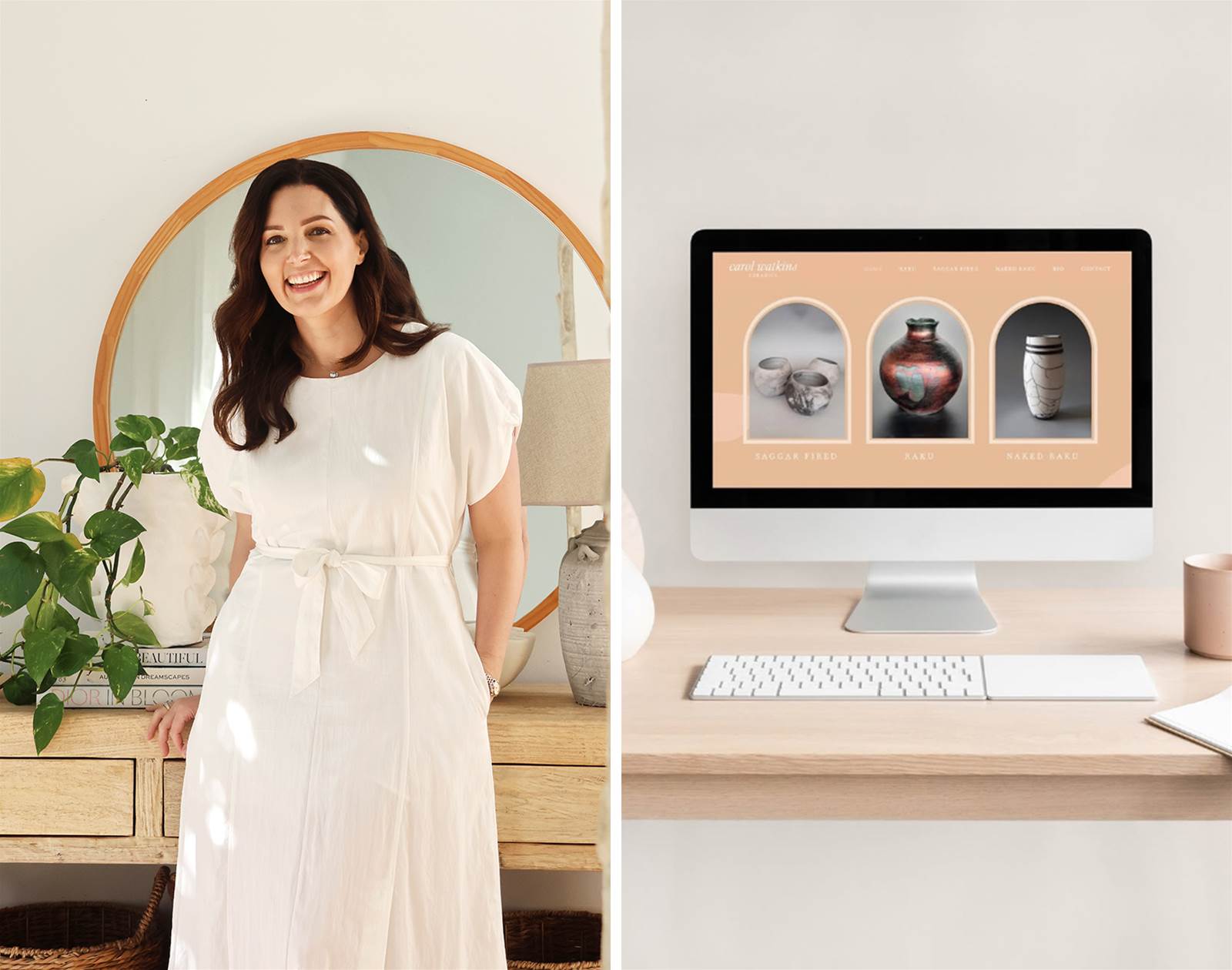 Amanda Magill of Amara Collective
How does someone new to a creative industry figure out how much they should be charging for their work? Briony: To come up with a project fee, I start with a scope of work to try to determine the number of days, weeks or months it's going to take to complete. I research what an annual salary might be for someone at my level doing the same job and from there I land on a day rate that feels right for the project. I find it really handy having an agreed day rate because it's easy to invoice for extra days if the job extends (which it usually always does).
Always make sure there's some kind of agreement in place before you start. It's incredibly common, particularly on complicated creative projects, to end up doing twice the work you anticipated for the same fee. Even a simple contract that clearly sets out the scope, fee, number of days and what happens if the scope changes can really help protect you.
Bec: I’ve had all kinds of different pricing points throughout the last 11 years. Before photography was my full-time job, I was comfortable charging less because it wasn’t my sole source of income. When I went full-time with my photography and wanted to earn a decent wage comparable to what I’d earnt in previous employment, I worked with my accountant to figure out my pricing. We looked at how much time I actually spend with a client – not just the time I’m physically shooting, but also the admin beforehand, communication, the shoot itself and editing afterwards. We worked out an hourly rate that felt realistic based on what other photographers were charging, the area I live in, how many shoots I realistically want to take on each year and what I’d like my yearly income to be.
There isn’t really a magic formula, but I think it’s important to remember that you’re not just charging for the hour the client sees you working. You need to cover your expenses, gear, subscriptions, insurance, professional development, editing software and all the other behind-the-scenes costs of running a business, as well as actually making a profit. And if a job starts creeping beyond the original scope, don’t be afraid to communicate that. If the client is asking for more time or work than was originally agreed upon, it’s OK to explain that there will be an additional fee. This is where I find having a standard 'hourly rate' can come in handy, as you can be upfront from the beginning that extra work outside of original scope will be charged hourly.  Bec Shaw
Amanda: I wish I could say I had a clever equation when I started freelancing, but I was largely winging it. When I moved to the Sunshine Coast, I was offered an hourly rate for a freelance job and thought, OK, that's my rate. From there, I increased it intuitively as my experience and confidence grew.
I don't think there is one golden equation because everyone's circumstances are different. What I do know now is that your rate needs to account for more than the hours in which you're physically creating something. You're also quoting, emailing, invoicing, finding clients, paying for software and equipment, taking holidays and covering quieter periods. A lot of freelancers wear every hat at the beginning, but all of that time still exists. I think pricing grows alongside confidence. You learn what takes longer than expected and what you need to charge to make freelancing sustainable.
The biggest thing I learnt was to set boundaries before the work begins. Be clear about what's included, how many revisions there are and what happens when the scope changes. If a client asks for something outside that agreement, communicate the additional cost before doing the work.
How do additional or unexpected expenses inform a freelance free? Briony: When I'm putting together a budget, I try to make costs transparent and relatable so the client understands why they're there. For example, if I add a delivery fee that seems high, I'll let them know that they're welcome to drive the 40 minutes and collect it for free. Suddenly the delivery fee makes sense because they can see the time and labour involved.
It's difficult when you're starting out because you can feel guilty charging for things that aren't tangible. But you're not just charging for the final object or the hours the client sees – you're charging for everything required to make that outcome happen. The right client will hopefully understand this!
Bec: For me, most additional or unexpected costs are built into my photography packages. My fee for family shoots covers things like my time, travel, equipment, admin and editing, so my clients aren’t getting a surprise bill for every little thing behind the scenes.
When I send my packages, I actually list what’s included, including things like pre-shoot communication, preparation, travel and editing. I think this helps clients understand that they’re not just paying for the time I’m holding my camera. If extra travel or other expenses are outside what I normally include, I’ll work out the actual cost and add that on. For example, you can calculate a cost per kilometre for additional travel.
I think the biggest thing is remembering that the client is paying for the service and the result, not just the minutes they can physically see you working. There is a lot of work that happens behind the scenes to make the final product possible, and that time still has value.
Amanda: The guilt of charging for invisible work doesn't necessarily disappear after 20 years. What changed for me was moving away from charging for every individual hour and towards fixed project pricing. I try to understand what a project is likely to involve and build that into the fee from the beginning. Our fixed prices are still based on an hourly rate, with software and other business costs factored into that rate. I rarely travel for work, but any additional costs specific to a project are accounted for too. Estimating how long something will take isn't an exact science. Some jobs take longer and others are quicker, and over time I've found that they tend to balance out. I still track my time because it helps me understand whether my fixed pricing is right, but the client knows what the project will cost from the beginning. I also have a contract that clearly sets out what's included, and anything genuinely outside that scope can be quoted separately.
I remind myself that the client isn't only paying for the final thing they see; they're also paying for the thinking, preparation and experience that allowed me to get there. After 20 years, I might solve something in an hour that once would have taken me five. That doesn't make the work less valuable, it just means I've become better and faster at what I do.
For more small-business stories like this, visit frankie.com.au/strictly-business, or sign up to our monthly e-newsletter. Have a small-business story you’d like to share? Pitch it to us.
Add frankie as your trusted source
.png&q=80&h=682&w=863&c=1&s=1)


.jpg&q=80&h=682&w=863&c=1&s=1)






.jpg&q=80&w=316&c=1&s=1)