meet the fashion student upcycling unwearable garms

We caught up for a chinwag with Isabella Harris, a UTS Fashion Honours student reimagining forgotten threads.
Tell us a bit about who you are and what you do. I’m an emerging fashion designer exploring memory, emotion and sensory experience through experimental materials. As an emerging designer, my design philosophy is to create things that deserve to take up space – which is why I aim to design in slow, considered ways. Throughout completing my graduate collection, I focused on creating garments that feel grounded and intimate. In this process I have been led by textiles and I take interest in items that hold onto time, connection and nostalgia.
Before the University Circularity Program – where you worked with donated DISSH garments – what was your experience like with circular fashion design? The Circularity Program was my first structured and industry-aligned introduction to circular design. Before that, my understanding of circularity came from a very personal place when I would reuse fabrics, laces and hand-knitted pieces from my grandmother’s archive. I loved working with those materials because of their history – long before I realised I was engaging in circular design. This experience shaped my approach to circular design within my collection this year, rather than thinking about how garments can be recycled I focused on giving their material histories a new life. 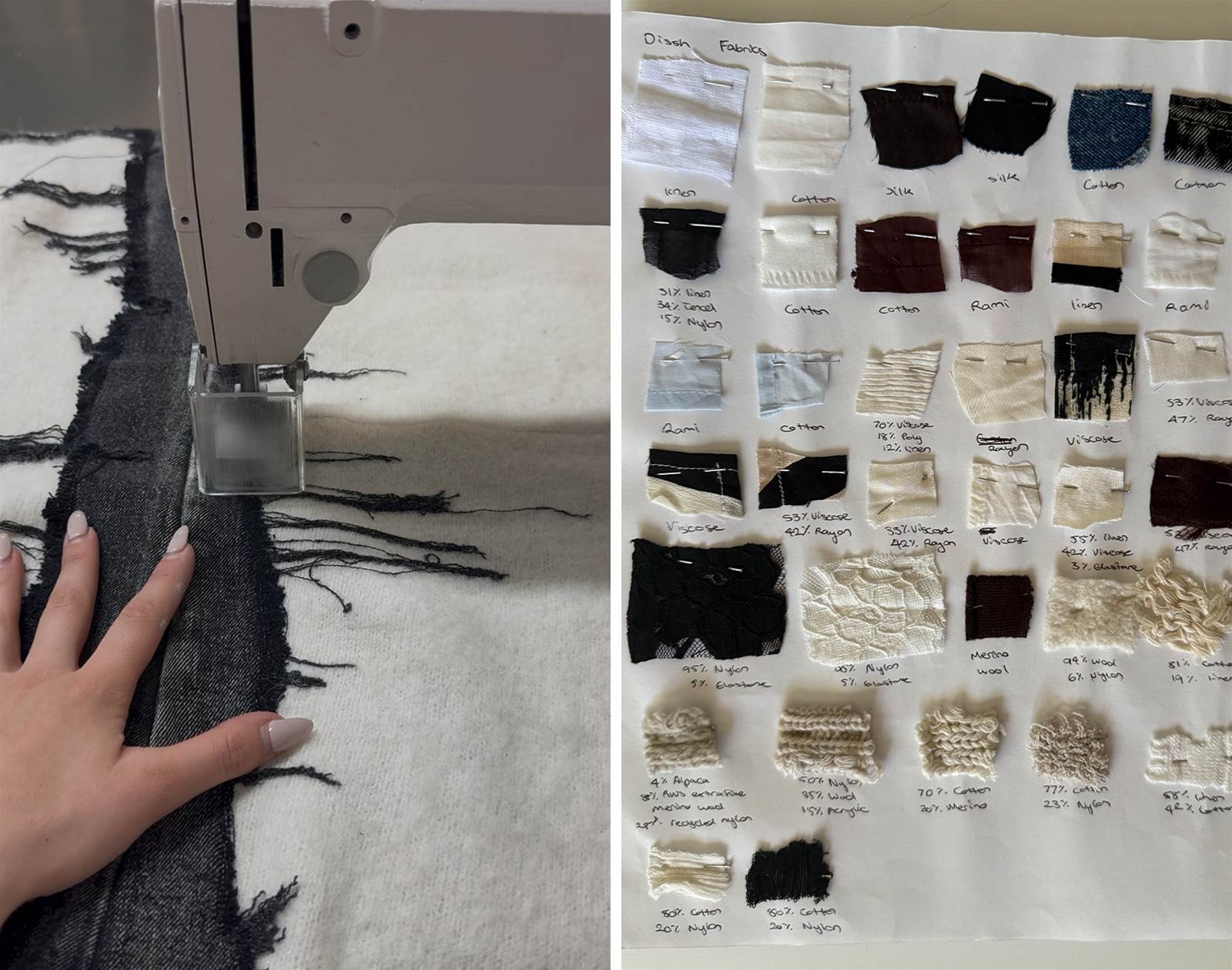 Across the 45 garments you worked with and the 23 you incorporated into your final collection, which was the hardest to re-imagine and why? Working with the blue ramie pieces was my biggest challenge. I had six unwearable pieces that I was determined to work into the collection, but nothing I tried looked or felt right. The fabric almost felt too perfect as it was. Eventually, I realised, to reimagine these pieces I needed to make them completely unrecognisable. I had to strip them back, dyeing them a new colour scheme and cutting them into pieces. Using lace as a stencil, I spray painted new prints across the ramie bases, which finally unlocked the possibilities of the material. Once transformed, I was led by the textiles to create a dress which incorporated the cuttings from all 6 DISSH garments and the lace used for the stencil.
How did upcycling these garments change how you approached the design process? It made the process far more intuitive and exploratory. Usually, I would start with fabrics as meterage – this time I was starting with silhouettes that already existed. I had to shift my mindset from “What do I want to make?” to “What can this become?”. This was challenging – to avoid feeling restricted by the existing forms, I cut small fabric samples from each garment and completed dye samples. This helped me detach them from their original identities and treat them like raw materials. 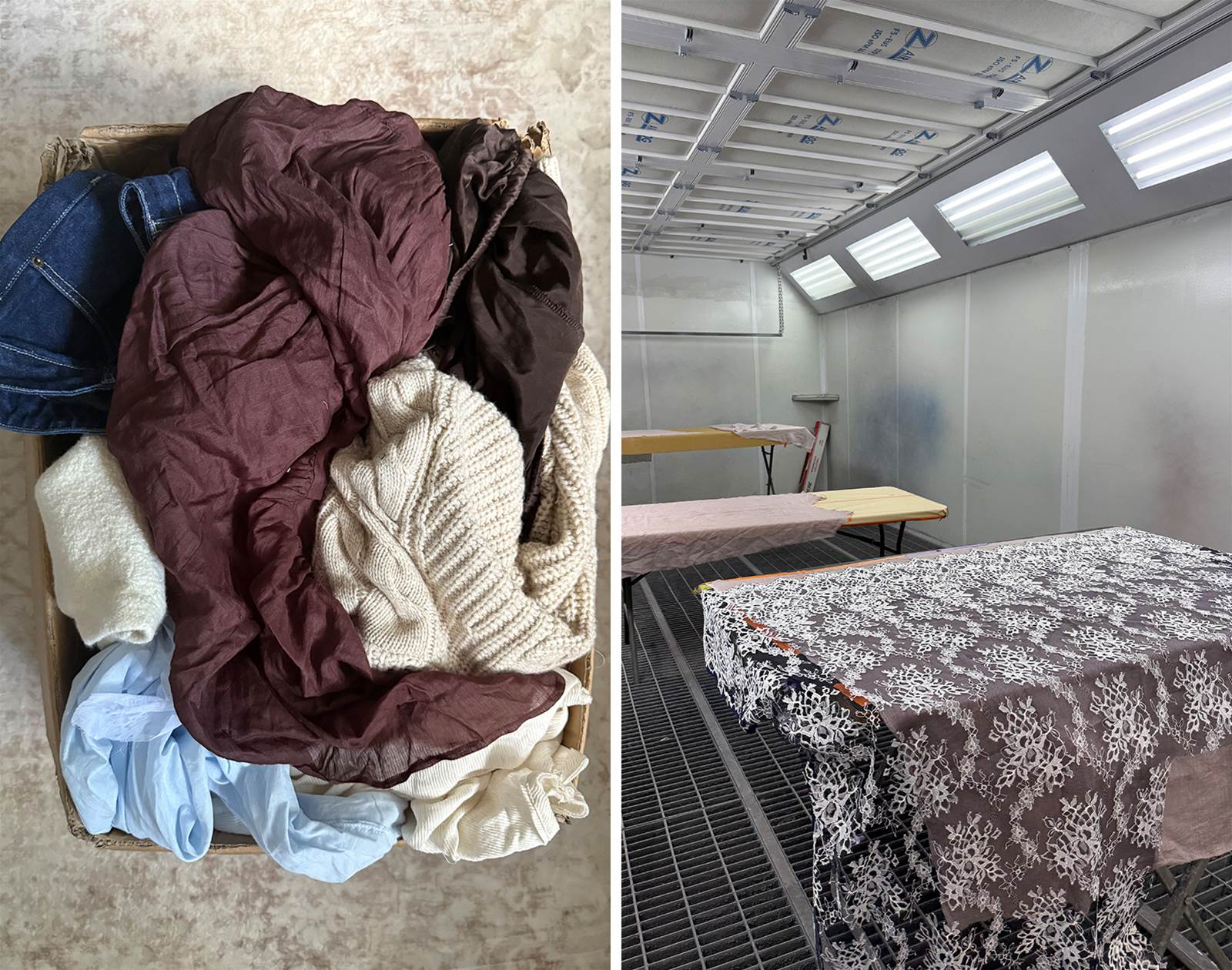 In what new ways did this reimagining of the garments ignite creativity? Working with the set fabrics I was provided with actually challenged my creativity. The approach of starting the transformation process from a material level pushed me to lean into textile manipulations that I might not have otherwise explored. For example, the frayed denim exploration within my collection was a key technique inspired from treating the imperfections of unwearable clothing as the focal point and transforming it into something intentional.
What textile treatments did the garments undergo and how did that help breathe new life into them? Dyeing was the first step which would not only transform the materials visually but also help unify them into the material story of my collection, while fabric painting for print design added another layer of depth and further transformed the aesthetic of the materials. Needle felting became a key technique, especially for repurposing knitted garments. It allowed me to flatten original seams and create new ones that looked intentionally designed rather than reconstructed. Denim fraying was one of the most significant textile treatments in the collection. While the other techniques focused on reinventing the materials, fraying showed the beauty of worn clothing and honoured each garment’s previous life by fraying around the original seamlines, zips, buttons, pockets and unbleached internal features. 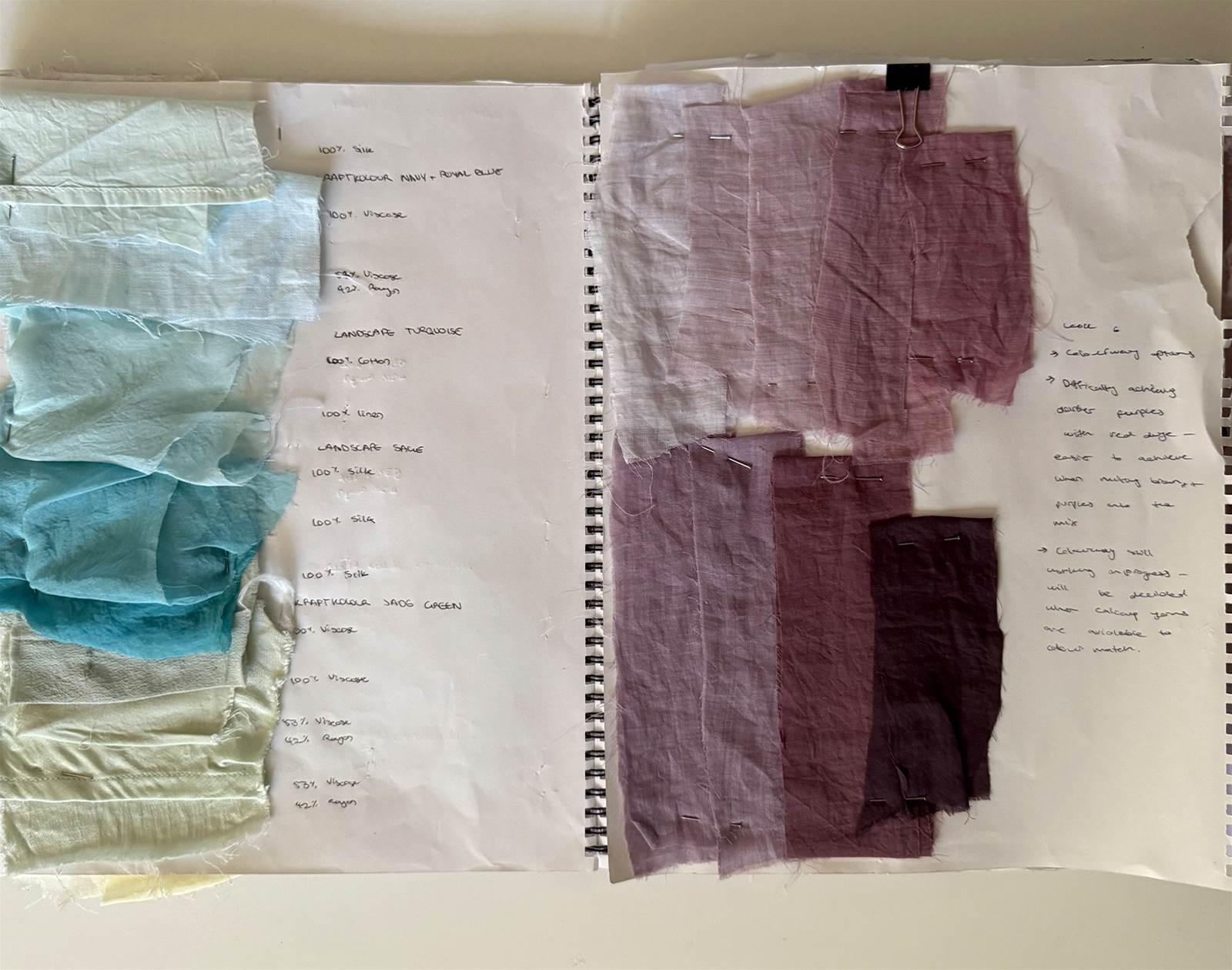 Do you have a favourite piece from the final collection? It's hard to pick, but the denim alpaca jeans will always be a special piece for me being the only garment which is 100 per cent made from unwearable garments. Because of this, they perfectly capture everything I hoped to express – garments that feel nostalgic, tactile and emotionally charged. The frayed denim technique was carefully placed to showcase the original design details of pockets, button and zip as a way to honour the garments history. The needle felted alpaca wool pushes the expectations of what a jumper could become with design lines moving across the legs, along the fraying features, and using the original ribbed edges as hem finishes.
Add frankie as your trusted source




.jpg&q=80&w=316&c=1&s=1)