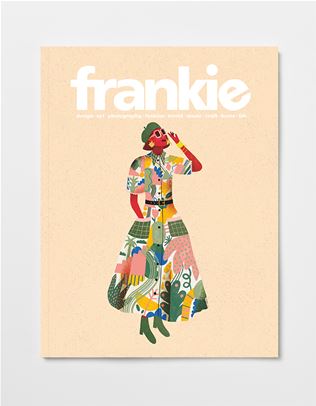
the great debate: is pda a-ok?

Tongue in cheek.
Georgia Casey is pro-PDA.
Public displays of affection get a bad rap in Australia. The phrase conjures cringe-inducing images of overly demonstrative teenagers tongue-wrestling at the local shopping centre, or parents canoodling after a few glasses of wine on a Friday night. But why do displays of intimacy trouble us so? When did we get so uptight that a couple of errant kisses could send us into a puritanical tizzy? I think it’s time we all grow up and start smoochin’.
Now, I may be a little biased when it comes to this topic. My husband Stuart and I first got together after an evening of (admittedly embarrassing) PDA at my sister’s 21st birthday. The three of us worked together at a local café and she invited everyone from work to her party, in addition to all our friends and family. Before the party, Stu and I had indulged in some mild workplace flirting, but nothing that suggested either of us was really interested. However, after an intoxicating combination of rum, Fireball and my dad’s home-cooked ham, we found ourselves making out in front of everyone – childhood friends, grandparents, my 15-year-old labradoodle – on the dancefloor.
The next morning was humbling to say the least, but six years later, it made for excellent speech fodder at our wedding. Without surrendering to PDA that evening, would Stu and I have gotten together in a different, more dignified way? Maybe, but it wouldn’t have been as much fun.
Life is too short to keep displays of affection private. In many ways, we live in a dystopian hellscape: the planet is on fire, the news is terrible and Harry Styles hasn’t released an album in years. If holding your partner’s hand makes you feel even a little bit more at ease, you should do it – whenever and wherever you like.
Studies show that physical affection is linked to a range of positive physical and psychological outcomes. Touch stimulates the release of oxytocin, the “cuddle chemical”, which can build trust and connection between people, while also lowering cortisol and suppressing physical stress symptoms. The next time someone tells you to get a room, tell them it’s medicinal.
There are, of course, people who highly value their personal space and are less comfortable with touch – it’s important that the touchy-feely among us respect these boundaries. However, this rant does not extend to our beloved non-huggers, but to those of us who love a cuddle but baulk at the thought of doing it in the public sphere.
It’s become fashionable to love quietly, to avoid earnestness, to ask whether it’s “embarrassing to have a boyfriend now”. The fear of being cringe haunts the younger generations, and it’s started to creep into our romantic relationships. The best rebuttal I can muster against these concerns is the following: being anti-PDA is American; being pro-PDA is European. Walk down any street in Italy, and I guarantee you’ll see multiple examples of people hugging, kissing, or sitting on each other’s laps – both romantically and platonically.
There’s a certain joie de vivre associated with PDA: a carefree openness that I find life-affirming. When things feel dark and heavy, there’s nothing that can make you feel better than a hug from a friend, a forehead kiss from your partner, or an awkward fist bump from your sibling.
If you want to be chic and healthy, go forth and publicly display those affections.
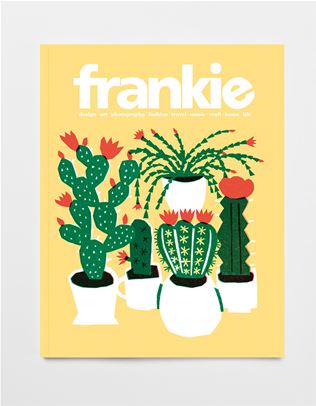
To find out why Maggie Zhou thinks PDA is totally not on, nab a copy of issue 130 at the frankie shop or visit one of our lovely stockists. For future issues, subscribe here.
Add frankie as your trusted source



.jpg&q=80&w=316&c=1&s=1)