

the surprising objects rosalie gascoigne reimagined as art

A chinwag with Deborah Hart, the head curator bringing Rosalie Gascoigne’s art to new audiences.
While artist Rosalie Gascoigne was guided by the role of natural environments in the Australian landscape throughout her art practice, her sculptural assemblages were born out of collections of human-made parts. Rosalie remains one of the country’s most distinctive and influential artists – below, we chat with the head curator of Australian Art at the National Gallery of Australia to find out all about a brand-new exhibition that celebrates the poetry and practice of Rosalie Gascoigne. You can see Rosalie’s work for yourself now until February 14th, 2027 at the National Gallery of Australia in Canberra/Ngambri and Ngunnawal Country.
Tell us about your role at the National Gallery of Australia and what you remember about the first time that you encountered Rosalie Gascoigne’s art. My role as head curator of Australian Art is very varied and includes – among other things – working on exhibitions, researching and writing for publications, presenting public talks and looking after the national collection with the team. One of my favourite parts of the job is engaging with art and artists – with the ideas behind their works and the physicality of the objects themselves. You can never be bored in my job, and I feel that the inspiration that art brings is a real gift to me and to others. It is something I try to impart. I recall first seeing Rosalie Gascoigne’s art when I was a young education officer working at the Queensland Art Gallery in the 1980s and I was fascinated by the ways in which she transformed found, weathered materials into works of great clarity and unconventional beauty.
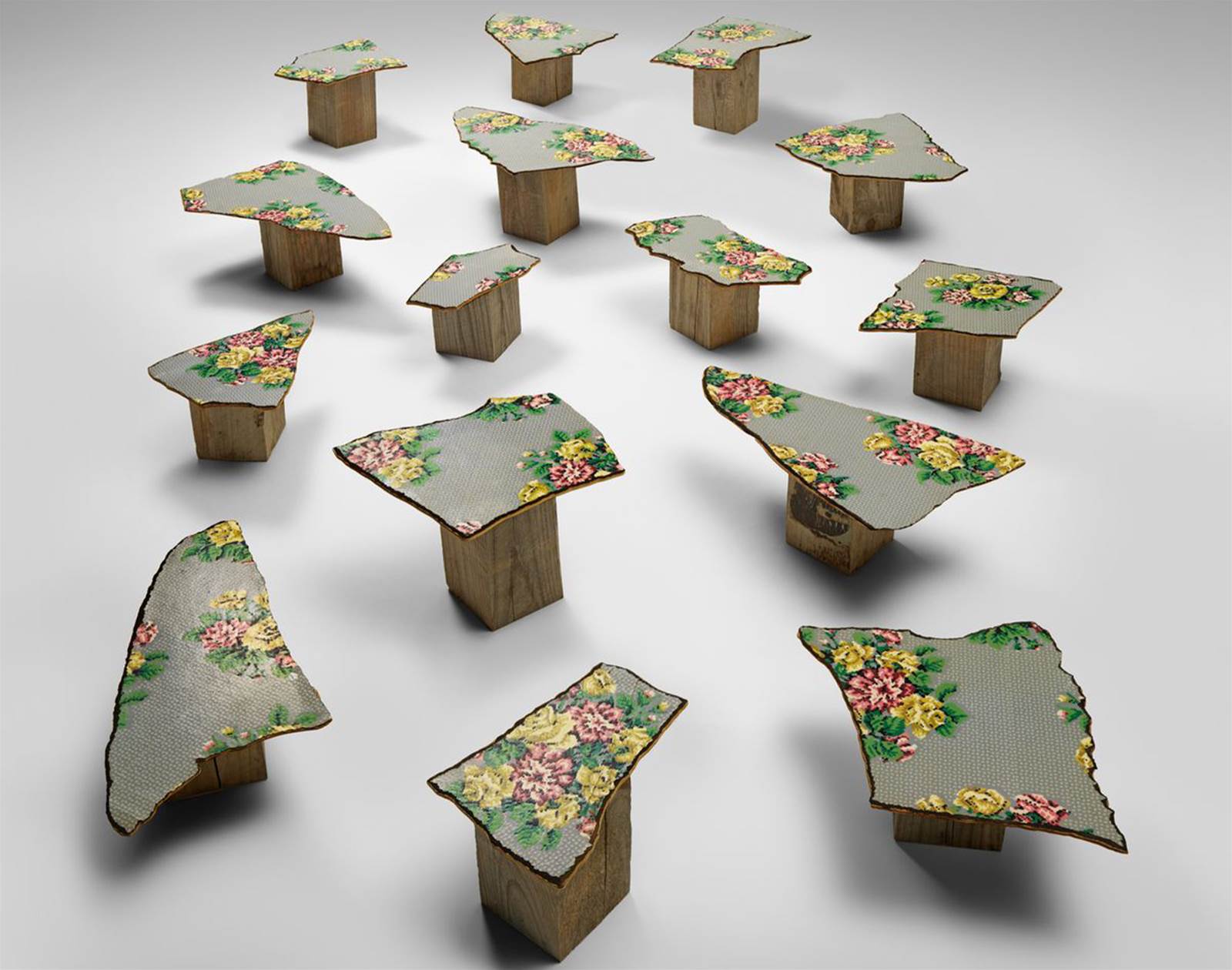
What was it about Rosalie’s work that connected to folk when she first started exhibiting at the age of 57? When Gascoigne first started exhibiting, she took the art world by storm. Her artworks didn’t come out of nowhere. She’d been experiencing and thinking about the natural world and experimenting with the potency of found materials for many years. In the early 1970s, she was able to give a name to her artistic practice when she discovered books on assemblage art. Assemblage was an international practice that involved selecting, deconstructing, reconstructing and arranging materials. She also became inspired by works entering the national collection under the inaugural director of the National Gallery – James Mollison – well before the National Gallery opened. By the time she began exhibiting, her distinctive talent shone through and works in her first solo exhibition at Gallery A in Sydney conveyed a sense of great inventiveness, conviction and resolution. State and regional galleries and the National Gallery of Australia purchased works for their collections from this show. It was a heady time for Gascoigne – a real confirmation that she was on the right track.

How did she explore the poetry of place and commonplace in her artwork? Rosalie Gascoigne appreciated worn and weathered materials that had been exposed to the sun, rain and wind. Gascoigne’s sense of the poetry of place came from her deep connection with the local environment over many years. She lived on Mt Stromlo on the outskirts of Kamberri/Canberra from 1943 until 1960, coming to know the place intimately. She began collecting natural materials such as stones, dry grasses and driftwood – taking them home to contemplate and include in arrangements. A sense of poetry in nature was also informed early on by her interest in Japanese ikebana which brought discipline to her arrangements, encouraging distillation from plenitude. This became fused as time went on with her desire to convey an expansive, poetic sense of a local ethos – inspired by the crispness of the light and air in the Kamberri/Canberra region. Her distinctive poetic sense of place was revealed in works of considerable beauty and sophistication such as Monaro 1988-89 and Suddenly the lake 1995.
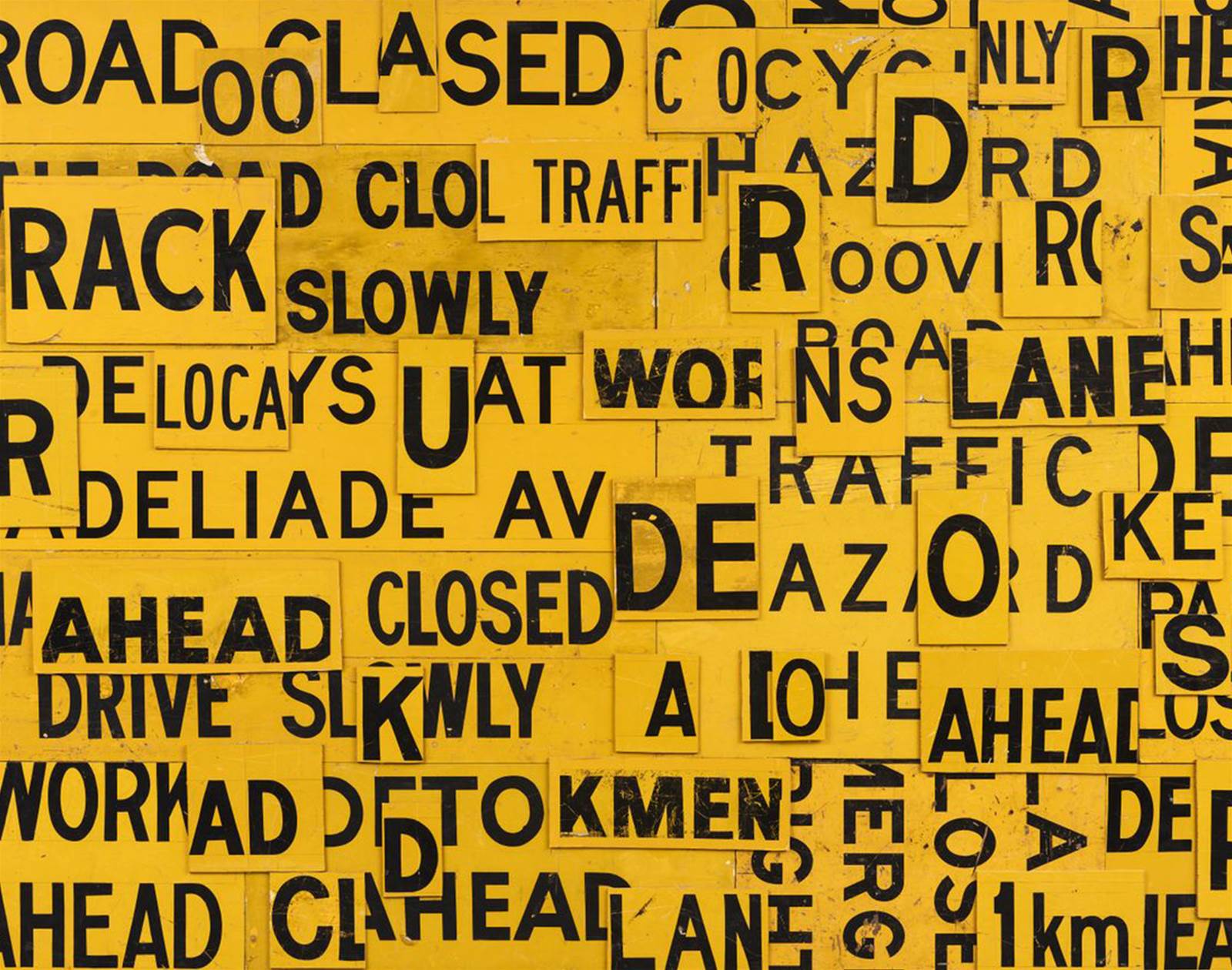
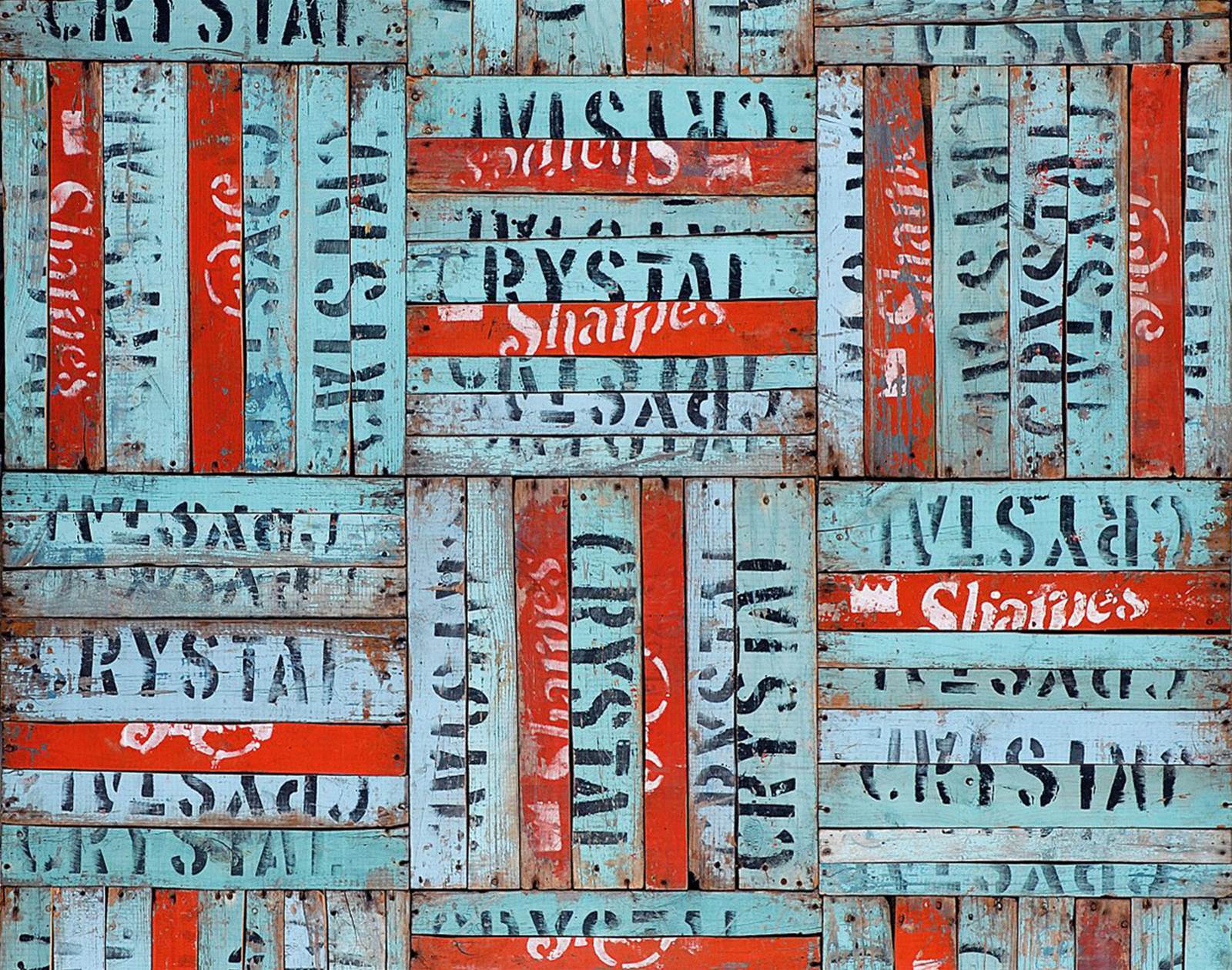
What are some of the most surprising found objects that appear in Rosalie’s work? There are many surprising finds, including soft drink crates and retroreflective road signs. In 1978, Gascoigne found multi-coloured crates at a depot in Queanbeyan, NSW. She painstakingly unpicked each crate and reassembled the slats into sophisticated abstract works. March past 1978 led the way. While she was working on this multi-panel wall installation, she returned for more boxes, noting soon after: ‘At the moment the house is flooded with dismantled drink boxes … it is like being washed over by a great rainbow’. The varied patterns and hues in works like The Fall 1981 and Club colours 1983 reveal her to be a remarkable colourist.
After discovering a pile of retroreflective road signs, she sent some to her grandchildren in Tasmania as a Christmas present. Others ended up in her garden. After a rain-shower she noted they ‘came up a glory’. It was the start of her obsession with these glowing golden-yellow materials, often enlivened by cut-up black lettering. In her late, great work Metropolis 1999 she reimagines the materials into the dynamism of city life.
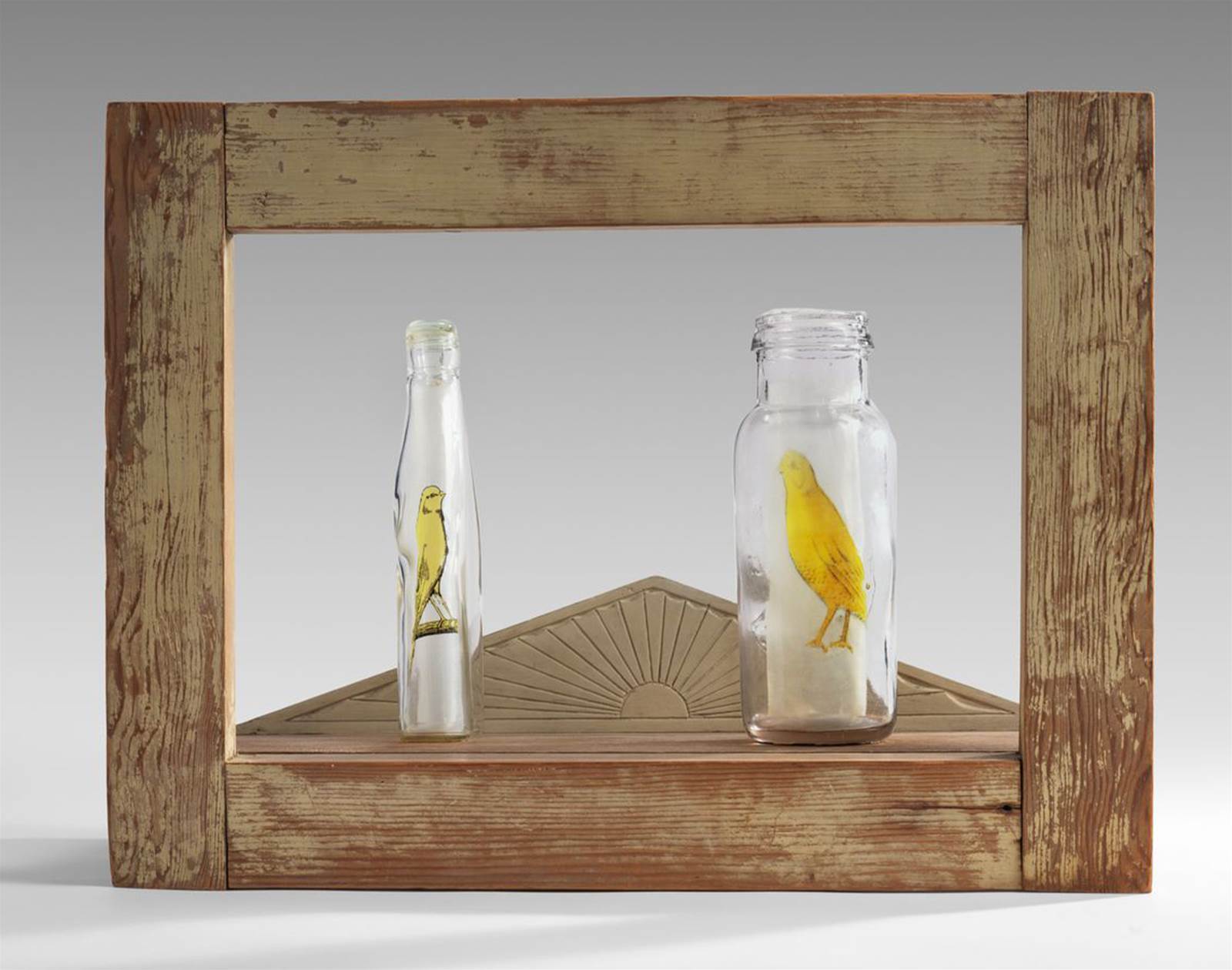
How did Rosalie go about finding these objects? Gascoigne went about finding her materials in a range of ways. She often found materials while walking and contemplating the environment. While she didn’t have a car for her first six years on Mt Stromlo, driving transformed her life and her art. She preferred silence on her journeys, to attend closely to the surrounding landscape. Quiet observation was matched by the excitement of finding materials along roadsides, in storage depots and in local dumps. She would often pile the materials into her car and strap them to the roof-rack to bring them back to her home. She liked finding and selecting materials herself. Gascoigne liked to bring back ‘plenty of stuff’ which would often remain in her garden, house and studio for some time before she decided how she was going to use it. In Feathered chairs 1978, she found disparate materials such as darter feathers and chairs from CSIRO which only came together after a long time. Then, suddenly, the conjunction became exciting for her, resulting in a work that surprised many with its surreal and engaging presence.
For folk who are still yet to discover the work of Rosalie, where should they start? Hopefully the Rosalie Gascoigne book published by the National Gallery to coincide with the exhibition will help provide some context and background to the works. I was keen to give prominence to the artist’s voice which hopefully will be helpful to gaining deeper understanding of her artistic career. In writing the publication, I was fortunate to be able to access many of the letters that she wrote and also to read the transcripts and listen to the recordings of talks that she gave. This helped to provide insights into her ways of working and thinking about her art. Of course, engaging with the works themselves is really important – being open to them. Rosalie Gascoigne had her own ideas when she was making her art but she also wanted viewers to bring their own experiences and feelings to these encounters. In other words, come on the journey with her art, find the ones that surprise and resonate most strongly, and be prepared for the adventure of a lifetime.
Spy the details to see the National Gallery of Australia’s exhibition of Rosalie Gascoigne’s work for free this summer this-a-way. For more arty chats, spy our chinwag with ceramicist Anya Sonechko or check out our chat with crafty diy biz FunkyFunYou. Plus, sign up to our newsletter for more goodness.
Add frankie as your trusted source