

learn something new: a history of the sharehouse

Make yourself a home.
 We’ve teamed up with the folks at UNiDays to bring you stories about all the stuff you go through when you’re studying. Did you know UNiDAYS members can nab a 15 per cent discount on their frankie magazine subscriptions? Well, now you do. Check the bottom of the story for more deets.
My first sharehouse was like a ride on a ghost train at a haunted theme park. The ceiling started leaking the second week we were living there. Windows either didn’t open or couldn’t be closed. For almost six months of the year, we could see our breath dance circles in front of our faces like a taunting type of tango. Our real estate agent was a dickhead; our landlord lived next door. Sewage flooded our driveway for a week straight. Knickers appeared in our washing basket if we left it outside overnight, wrapped up in our clothes like some demented gift – we never found out who they belonged to. We called it The Shack because it wasn’t a real house; it wasn’t meant to be lived in. But it was our shack. Our haunted theme park. For those 12 months, young and dumb and living with my two best friends, I loved every minute. It was as much a home as I’ve ever lived in.
The lack of liveable Australian rentals in the housing crisis has meant that living alongside others – friends, foes, strangers from the internet – remains as much a rite of passage to one’s coming of age as it is a growing means of survival for those who’ve typically aged out of black mould and milk-crate chairs. Sharehouses aren’t just for the young and dumb anymore; but nor did they begin that way.
Long before we established the current iteration of the sharehouse as we know it, some 10,000 years ago we started to build long-term settlements that functioned as communities during the Agricultural Revolution. By the Early Middle Ages – around 500 CE – medieval homes were made up of friends and extended family members. Community was still a pillar to be relied on as a means of survival. Around the 12th century, Western Europe saw the beginnings of the single-family household, and a few hundred years later, during the Industrial Revolution, the idea of individual homes for single families really ramped up, thanks to less dependence on communities for domestic duties. For wealthy households, this dependence shifted to servants.
While some European cities in the early 1900s began to flirt with the idea of cohousing (private homes with shared communal spaces) to distribute the brunt of household labour, much of the domestic work in homes was considered the responsibility of women. In the 19th and early 20th centuries in Australia, boarding and rooming houses were becoming all the rage. These safe havens provided a mix of room and board, meals and laundry to a slew of single folk – like workers, students and new migrants – and, as vessels of domestic labour were assumed to be, they were typically managed by women.
1970s Australia wasn’t all mullets and hippies – it also made way for the steadfast rise of sharehouses (which contained plenty of mullets and hippies).
But culture was about to change, and so too were the limits of women’s roles within it. 1970s Australia wasn’t all mullets and hippies – it also made way for the steadfast rise of sharehouses (which contained plenty of mullets and hippies). More than ever before, women were experiencing a kind of freedom that began to unravel the ribbons of gender roles; the ties that knotted them to living with either a husband or their biological family were coming a little undone. Progressive ideals of counterculture and second-wave feminism collided in a perfect storm, and in the eye of it sat the sharehouse. While previous versions of boarding and rooming houses in Australia were typically run by women for men, the sharehouse seemed like something of a utopia for the lasses escaping domestic hell – sharehouses had the potential to be run by women for women. The only hairs they were unclogging from the drain were their own.
Behind closed doors, women were carving out a space for themselves in the wallpaper of their newfound freedom. Domesticity was shared, childcare was communal, and living in the presence of men was a choice rather than a given. For the first time, it was safe and normal for women to move out of their parents’ house without having to move in with a husband. The communal living experiment of the 1970s might have begun as just that – a feat of countercultural experimental living – but while sharehousing for the purpose of testing societal structures dropped in the coming decades, the appeal of communal living stuck around.
Sharehousing was born out of a need to share domestic duties among community; today, it survives out of a need for folk to, you know, survive. A rite of passage has become an economic necessity in the housing affordability crisis – many Australians are now sharehousing well beyond the typical age that one comes of age. But beyond two-minute noodles and dodgy paint jobs, there’s no denying that a softening of household costs isn’t the only reason the sharehouse thrives in our current times. Housemates aren’t just people to split the bills among – they’re something like a community in a world that encourages individualism.
Sharehouses aren’t just for survival anymore; they’re also for living in.
More and more people are coming to terms with the idea that they might never own a house, but the long-ago sharehouse experiment has meant they can find a home. For women, LGBTQIA+ folk, single people, new Australians and working-class folk, the experiment was so successful that it became a way of life. Sharehouses aren’t just for survival anymore; they’re also for living in. And for those who were once only given the option to move out of their family home once they were making a family of their own, the choice now exists for a different kind of family to be found.
Five years and four sharehouses later, I’m living in a home again. It’s in a kooky suburb down by the river, overlooking a piece of public art that we’ve dubbed the Cheese Stick – more Luna Park than haunted theme park. The sewage stays in the pipes and the only knickers in our washing basket are ours. I live with two women I would die for – or at least unclog my drain hair for. Our lives are both in sync and separate, but our home is intertwined as one whole thing – something that extends beyond the walls where we cohabit. Give us the ghosts of previous tenants and demonic under-lord landlord any day; we wouldn’t care – there’s no place like home, except for these people I’ve made one with.
To discover some recommendations for television, movies and books about sharehousing, nab a copy of issue 132 from the frankie shop or visit one of our lovely stockists. For future issues, subscribe here. 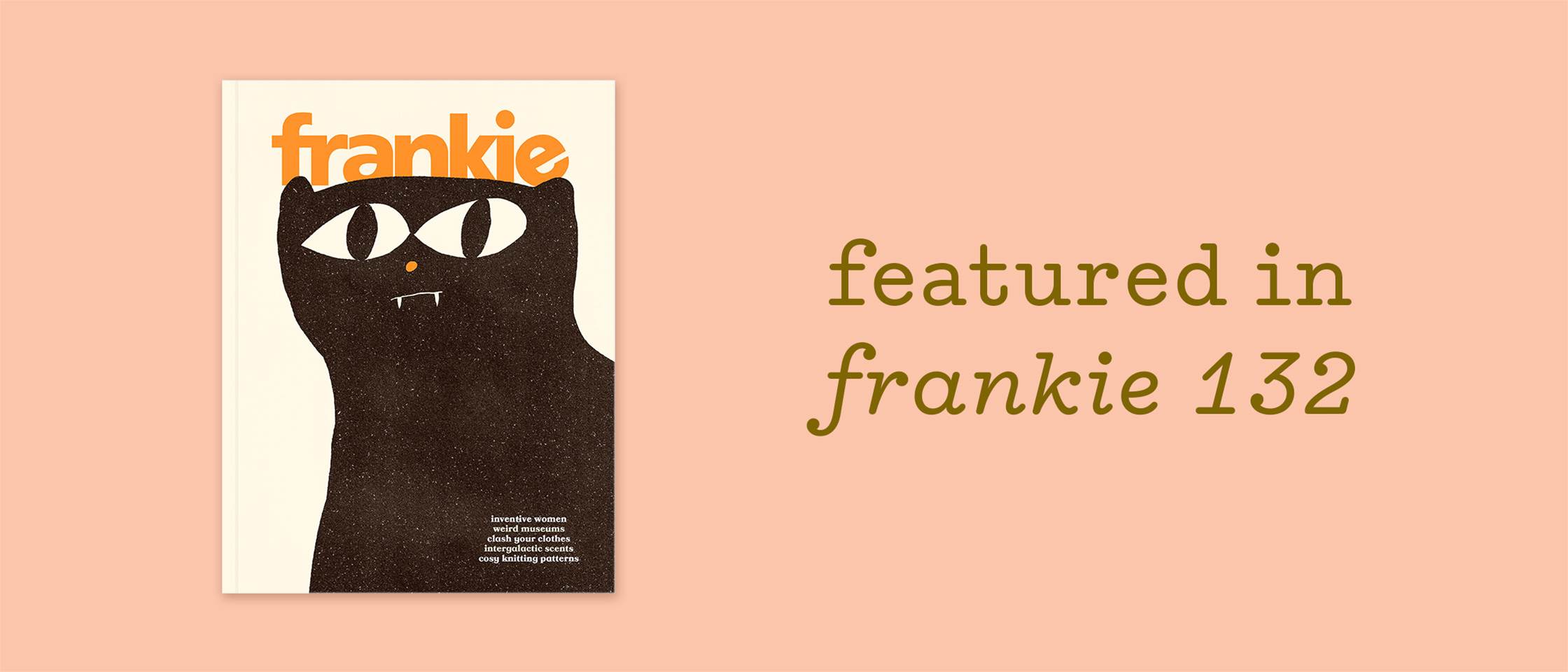
Thanks to the kind types at UNiDAYS, uni students can nab 15 per cent off their frankie subscriptions. Just click here, then register or log in using your UNiDAYS member details. Easy as!
Add frankie as your trusted source