
.jpg&q=80&w=1120&c=0&s=1 "how to build a film world from scratch")
how to build a film world from scratch

Recent AFTRS graduate Sophie Blanch shares how she created the award-nominated visual world of 'Mum's New Boyfriend'.
 What does it take to build a world from scratch? For production designer Sophie Blanch, it meant transforming a suburban Australian home into a place where witches, knights, elves and monsters could coexist with a very human story. Sophie's work on the short film Mum's New Boyfriend has earnt her an Emerging Designer Award nomination from the Australian Production Design Guild – an impressive achievement for the recent AFTRS Bachelor of Arts Screen: Production graduate. We spoke to Sophie about finding her creative niche, the magic of practical effects and why the smallest details can tell the biggest stories.
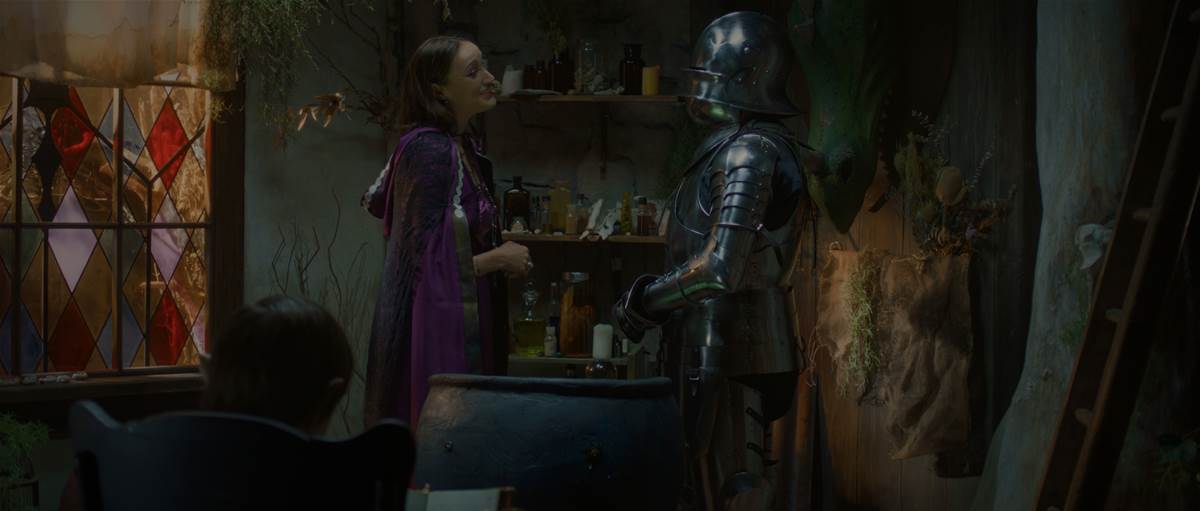 Hi Sophie! When you first read the script, what excited you most about the film? My roommate and I read through all the scripts together. I wanted to do something that leant somewhat into a horror or a fantastical world. Then we read that script and we both looked at each other and were like, "This is the one. It's got both!”
The film tackles domestic violence and coercive control through fantasy, with witches, knights, elves and a monster. How did you approach creating a visual world that could hold both those magical elements and such a serious subject? It felt really important that we were seeing and following the perspective of Ziggy, the child character. Within the house, everything is fairly natural. But then, following his imagination allowed us to explore how he was perceiving this world around him – things adults around him weren’t picking up on. Looking into this fantastical world was a way of zooming in on how these real world things around him were making him feel and think. 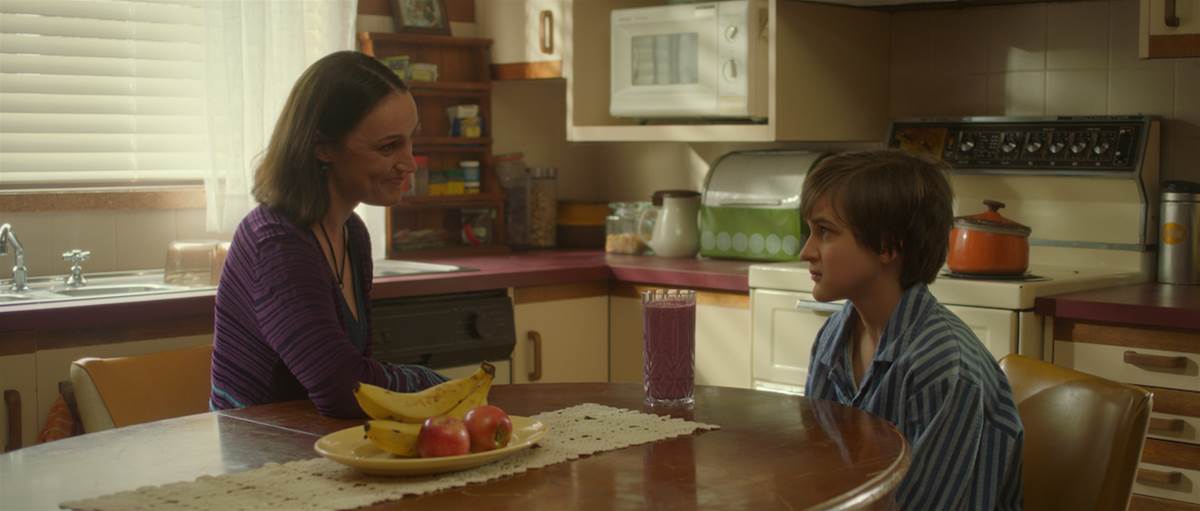 I loved how recognisably Australian the family home felt. What details were important to get right? We scouted houses that were up for demolition to find the perfect bones of a place. The directors wanted the set to be vaguely 1970s. We had seven rooms to dress and the art department was a team of two people, so I designed, and then Aliyah Issa did a lot of the set decorating. We worked pretty strongly as a team. The Australian feeling comes through even in the witch’s cottage – there is a eucalypt tree growing through the set. I wanted the witch's cabin to be set in what was very clearly an Australian bush to separate us from something that could feel like a fairly American story.
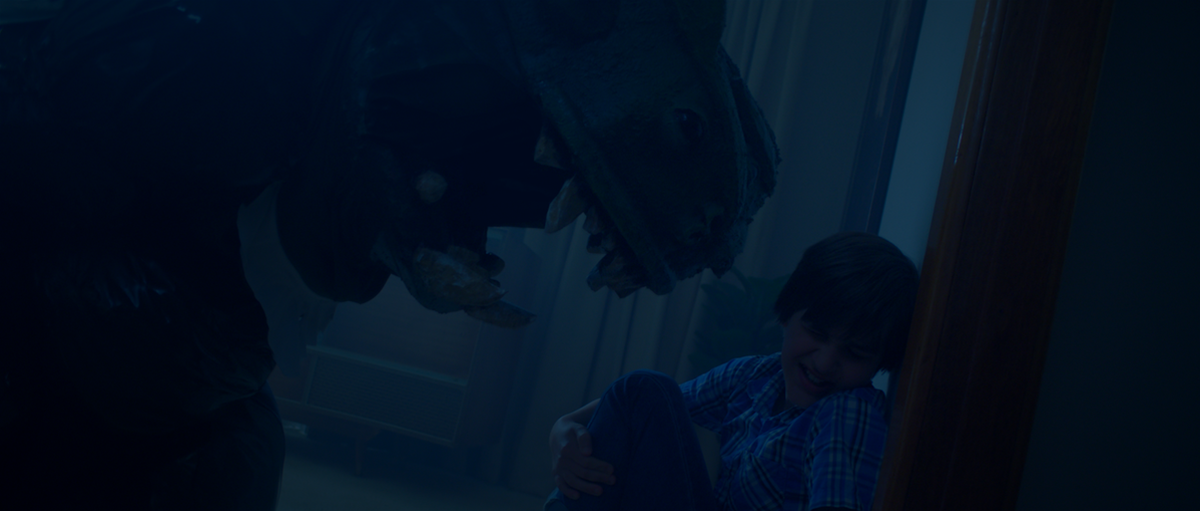 Can we talk about the monster? How did you bring it to life? It took months of construction because it was made entirely from scratch, and it was puppeteered! So we had an actor in a morph suit I built the muscle onto, and then separately I built the head as a small sculpture first, and then eventually made it bigger. The jaw was openable by a little string externally in the muscle as well. I have a personal love for trying to implement handmade and human-made things wherever possible. I think that there is a sense of us losing touch with human touch sometimes in film.
What do you love most about production design? The thing that I love most about production design is that you're taking the script for what it is, and then constantly pushing it further and further and further.
Making a film is such a collaborative process. What did you enjoy most about working with the rest of the creative team? We had a very focused team. All of the crew are people from my AFTRS Bachelor of Arts Screen: Production cohort, so it's all people that I know and work well with. But in particular, the cinematographer Skye Netting is one of my really good friends. I think that the design has to work in tandem with the cinematography, and it was really great to be on the same page with Skye, and know that all of the work that I'm putting in is going to be seen in the end.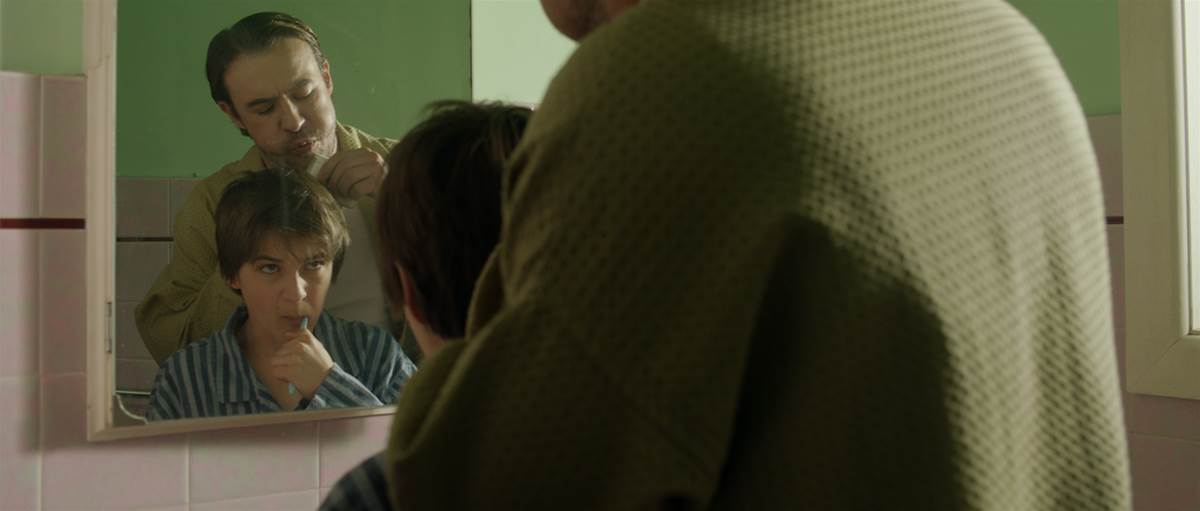 You studied Production Design as part of your BA at AFTRS and were also a scholarship recipient. Looking back now, were there any particular experiences, projects or facilities that gave you the confidence to take on a film as ambitious as this? I grew up rurally in Tamworth, New South Wales, and when I moved to Sydney, it was quite a big jump because I didn't have any family here. I'm really grateful for the space the scholarship gave me to really focus on my studies. I actually went into the AFTRS course thinking I wanted to be a cinematographer, but then the Bachelor's very generalist so you taste test everything. Then in year three it gets a little bit more specialised with electives. The course helped me realise that my fascination with cinematography wasn't actually cinematography – it was what was in the frame. It was how people were dressed, what kind of worlds they were in, or what was constructed for the camera, rather than the technical side of the camera work.
What's next for you? Is there a dream project or world you'd love to help create one day? I have always wanted to do a gothic horror, whether that's in costume or production design! Also, anything that's hyper stylised really, really intrigues me. I just love diving into worlds that lean more into extreme versions of themselves.
This interview was produced in partnership with our pals at AFTRS. Curious about where a career in screen could take you? Applications are now open for Bachelor of Arts Screen: Production at AFTRS.
Add frankie as your trusted source